Wednesday, August 5, 2026

Book Review: Sea of Tranquility

Sea of Tranquility by Emily St. John Mandel is as intriguing as they come. Speculative fiction with a literary bent, it explores the themes of love, loss, duty, and destiny through the lens of time travel.

It's difficult to explain the setup for this book. Three seemingly unrelated people from three different time periods (early 20th century British Columbia, 2020 Brooklyn, and 23rd century moon colony) have a shared experience/vision that appears to be an anomaly in time.

Image via Indianapolis Public Library

Gaspery-Jacques Roberts is sent by the Time Institute to gather information about the anomaly. A ne'er do well with a brilliant sister, Gaspery grew up on a moon colony but has had no real direction in life. This anomaly, however, sparks something within him, and he undergoes training to blend in to the different time periods where he'll interview the central players.

What follows is a time-spanning narrative that seems disconnected at first until it all comes together--clicking in brilliant fashion as the novel reaches its conclusion.

Mandel excels at small character moments and world building. The moon colonies of the 23rd century feel just as lived in and lush as the 1912 British Columbia forest locale that is so essential to the plot mechanics. Gaspery himself is a relatable protagonist thrust into a seemingly unsolvable situation.

The novel plays with the themes of time and place and destiny. It explores relationships, both familial and romantic, in unique ways. And while I'm fairly certain the anomaly really amounts to a gigantic, unsolvable time paradox, that's par for course in any story that deals with time travel.

Sea of Tranquility won't be for everyone. 

The first few chapters involve disconnected characters and rely on the central mystery to lure readers in. 

If it doesn't catch you immediately, you may find yourself bored by what appears to start as a dry introduction to a monied 20th century English transplant who's trying to find his way in the North American wilderness. 

Then, suddenly, you're in 2020 Brooklyn reading about the fallout of a Ponzi scheme before being whipped into the 23rd century on a book tour with an author whose novel about a pandemic also includes a scene referencing the very anomaly Gasper is investigating. 

It can be jarring, no doubt. My advice would be to stick with it.

Wednesday, July 29, 2026

Book Review: The Last One

The Last One by Will Dean is a thriller set aboard the RMS Atlantica, a luxury cruise ship.

The main character, Caroline (Caz) and her boyfriend set off on a romantic weekend with hundreds of other guests. 

When she wakes up the morning after the ship departs, Caz discovers the Atlantica is empty except for three others: Daniel, a 30-something adventure sports instructor/jack of all trades; Francine, a 20-something college student; and a surly passenger simply known as Smith, an American who runs a vending machine business.

Image via Indianapolis Public Library

Together, the four must figure out where the ship is going, why the Atlantica's crew and passengers disappeared, and how to survive when the massive luxury liner has no electricity, no food, and no running water.

To say much more would spoil this briskly paced read. Then again, there's part of me that would like to spoil it so you could decide whether or not the entire novel is a waste of your time. 

I'm kind of fifty-fifty on that. It's a perfectly intriguing setup, although the stakes escalate at a ridiculous pace and the ultimate payoff made me roll my eyes, as did the "ending." I'll just say that there are some truly horrific elements and tension that end up being completely undercut once Caz reaches the finale.

I'm also not sure I liked many of the characters, which is a problem given that the book prominently features four people and is told by Caz through a first-person perspective. Daniel seems too good and competent; Francine too naive and whiny; Smith too inaccessible and brusque. Caz's personality seems to mold itself to whatever the book's next false crisis requires, and she's almost always overdramatic.

Listed at 445 pages, The Last One has 133 chapters, meaning chapters average less than three and a half pages each. It's clearly designed to suck you in with short chapters that'll have you saying "just one more" with each miniature cliffhanger. It is effective, I'll give it that.

My recommendation would be to give it a try, just so that we can commiserate on whether the many twists and turns were worth it, given where things end up.

Wednesday, July 22, 2026

Book Review: The Paradox Hotel

 The Paradox Hotel by Rob Hart is part science fiction, part locked-room mystery, and part crime noir.

The main character, January Cole, once worked for a law enforcement agency dedicated to protecting time. She's traveled so much, however, that she's in the second stage of a temporal crisis that makes it nearly impossible for her to tell the difference between the current reality, the past, and the future.

Image via Indianapolis Public Library

She now works as the head of security at an establishment affectionately known as "The Paradox Hotel." It's a waypoint between wealthy travelers and the Einstein Intercentury Timeport--essentially an airport for time travelers. That's right, time travel is possible in this world as long as you're rich enough to take advantage.

Jan, as jaded and hardboiled detective as any, goes about her daily business to keep the hotel safe and the patrons as happy as possible (although she herself doesn't care much if the patrons are happy).

When she flashes forward to a locked hotel room with a body inside, well, the game's afoot. She has to figure out who the dead guy is, where he came from, and how she's connected to all of it. Oh, it's  also possible the whole thing could be a time-shifted fiction created by her less-than-anchored-to-the-present mind. Along the way, she'll encounter sniveling guests, confront personal trauma, grapple with sudden time shifts, and uncover a conspiracy that threatens to upend everything she thought she knew.

It's an enjoyable enough read, although Jan is so sarcastic and competent (and considers everyone around her completely incompetent) that she registers more as a trope than a character sometimes. I didn't mind it--I've encountered plenty like her in fiction--but her cavalier attitude, constant quips, and unrelenting cynicism can become grating. A clever, sharp sense of humor helps keep things going.

From a character standpoint, it all works out in the end, as Jan sees some much-needed (and much-appreciated) personal growth. The plot is thick with mystery and high-concept ideas that are intriguing enough to keep you going, and I'll rarely criticize a book that has characters tracking down temporally displaced velociraptors that escaped containment during an attempted smuggling operation.

Wednesday, July 15, 2026

Book Review: The Deluge

In my review of Dan Brown's The Secret of Secrets, I mentioned the off-putting length of the narrative.

Ladies and gentlemen, we have a new world champion.

The Deluge by Stephen Markley clocks in at about 900 pages and you've really gotta want it to make your way through. This is a Game of Thrones-length novel that's not for the faint of heart.

Told by various characters in different points of view (Markley employs all three persons: first-person, third-person, and yes, second-person POV), this sprawling eco thriller spans decades and may just reduce you to a yammering headcase who rocks himself in the corner of a room.

Image via Indianapolis Public Library

To put it simply, the book addresses climate change/global warming, the various ways in which humanity failed to address it, and the grim fallout from that inaction. The outlook is bleak, the consequences maddening, and the parallels to current events rather...distressing.

We follow the founder of a radical environmental movement who doesn't care about the political leanings of her allies as long as they support her climate agenda (most of her chapters are told in first-person through her partner); the leader of an even more radical group of ecoterrorists determined to destroy oil and electrical companies; a genius-level analytics guru whose algorithms and computer models drive government policy; a scientist whose disturbing visions about climate disaster spur him to write a widely read book that draws as much scorn as acclaim for its solutions; an advertising executive whose romantic run-in with an actor has unexpected consequences years later as she grapples with her personal life and professional legacy; and a Midwestern junkie whose once carefree life leads to despondency, addiction, recovery, religious conversion, prison, and unrelenting bleakness.

Packed with real-world science (or at least convincing enough science in the vein of Michael Crichton), politics, and economics, the ambition of this novel is stunning. While character-driven chapters fuel the narrative, the book has a few interstitials that include fake news articles (such as a profile of environmental activist Kate Morris from Rolling Stone), interview transcripts, and news reports. These small touches (including the occasional roundup of notable headlines) add some additional realism to the book.

The Deluge juggles multiple characters and themes. Some chapters are told in first person through the perspective of a single character. Others are limited third-person while some take the omniscient third-person viewpoint. Chapters featuring "Keeper," an Ohio junkie, take a second-person approach, putting the reader in that character's mind by turning the reader into that character (a non-book example for context: "You go to the store. You feel the bitterly cold air against your face as you slam the door shut on your beat-up, rusted-out Chevy Equinox"). Chapters from the analytics guru are told through executive summaries and reports, with these documents including the character's inner thoughts and narrative.

Despite its length, complexity, and generally bleak tone, it's a page turner. For me, this was for two reasons: the narrative was compelling and I was racing against the clock to make sure I finished the dang thing before I had to return it to the library. Digital loans from the Indianapolis Public Library last for 21 days, and I had about 10 days to read The Deluge before it had to go back (I could renew it for another 21 days if needed).

I had no idea about the length until I first opened the book, which is ironic since The Deluge is most famous for being an incredibly long read.

A lot of readers will quit--I almost did--because the book is a slog through the first 200 pages or so. Characters rarely intersect, the POV shifts are jarring, and I felt like I was waiting for something to happen. Instead, I was spending time with these disparate characters in formative points of their lives. It all pays off eventually, but, man, it's an investment.

In writing and publishing, I've learned about the importance of the first pages and building narrative momentum. I've also been told the importance of word count and that novels with word counts hovering in the hundreds of thousands are non-starters. The Deluge shatters these rules.

Were I to put on my editorial hat, I feel like there's plenty that could be cut from the narrative. I read in some interviews that Markley worked on the book for about a decade and had already cut six or so point-of-view characters. 

He could have gone further. 

The Keeper chapters, with their janky second-person presentation, are far removed from the rest of the book. I would have cut them, even though they show the scourge of climate change and economic collapse through the eyes of someone who has no elevated standing in society (and even though, in the end, they do intersect with the main narrative). The character goes through an interesting journey, but he's not truly engaging until his final chapter.

In a book this long, with so many characters, slogging through several chapters waiting for a character to finally get interesting frustrated me.

Eco activist Kate Morris could've also used some refinement. At few points in this book does she act or talk like a real person. She's supposed to be edgy, cool, and unpredictable (her nickname is "Kate Chaos"), but she came off to this reader as an eye-rolling attention hound. Her abject cruelty to those around her and her insatiable lust conflict with her stated goal of pursuing environmental reform without compromise. There is no nuance in her. 

I realize that's probably the point (and people are allowed to have contradictions--that's why we're people!), but she could've been cranked down from 22 to 11. She's just too unbelievable as a character, a Manic Pixie Dream Girl Eco-Warrior Mary Sue Relationship Battering Ram.

That's probably by design. We never get into her head (with the exception of a third-person chapter more than midway through the book), so we only view her how other characters and the media view her. She's crucial to the book, both from a narrative and philosophical standpoint. I'm not asking for her to be toned down or sanded down to wholesomeness--I felt she lacked authenticity that would have made her more emotionally engaging.

Then again, she inspires a worldwide movement and gets her own statue. Who am I to judge?

The book reveals some interesting narrative concepts near the end. As the novel reaches its conclusion, we learn that some of the chapters were "written" by artificial intelligence. Tony Pietrus, a scientist who is introduced early in the book, is succumbing to cancer and asked to write his memoirs. In failing health and frail, he shares stories with an A.I. that analyzes his style and transforms his stories into a full book that mimics his tone and style.

Along those same lines, the chapters about an aging ecoterrorist named Shane are an analytical reconstruction of the bits of information A.I. modeling is able to learn about her. These parts of the book are annotated with asides (brief biological sketches of other characters, summaries of events, briefs about a contemporaneous character's state of mind or background). No one ever learned her true identity because she covered her digital tracks so well.

The chapter that briefly puts us in the mindspace of Kate Morris? That is revealed to be an analytical reconstruction of a key, world-shattering event (an environmentalist-led occupation/shutdown of Washington, D.C., that ends in terror and tragedy). That chapter, in the book's world, is a synthesis of many different sources fed into an A.I. to reconstruct the terrible events of those days and turn them into a cohesive narrative. Thus, even when readers see the world from Morris' point of view, they're not really seeing it. It's a construct.

For some readers, the world of The Deluge may be all too real. For example, through years of lobbying and pressure campaigns, Morris and a coalition of groups get the government onboard with a revolutionary bill focused on the climate crisis. While it has some compromises, it is a groundbreaking measure and a critical first step. It passes in the House, but once it makes it to the Senate, most of those environmental safeguards are stripped away from the bill, which essentially transforms the United States into a surveillance state.

The hope of real change turns into a juiced-up Patriot Act as the government becomes obsessed with rooting out "insurgent" environmental fanatics, scientists, and ecoterrorists. Given how screwed up today's Washington is, it's far too easy to see something like that happening within the next year (or maybe next week).

Other unsettling realities of this novel's world: climate change has so thoroughly damaged Earth that storms are constant and terrifying; global warming has permanently altered our ecological systems and the food chain, leading to the extinction of many species; the nation's capital must be relocated further inland to Cleveland, Ohio, because D.C. is inundated with frequent flooding events that lead to shutdowns; a failed actor becomes a national figure who cultivates a significant right-wing following and almost becomes president; the dream of Mark Zuckerberg's Metaverse is realized, not through Meta itself, but through a different company that crafts virtual reality worlds (stylized as "worldes" in the book's nomenclature) that everyone relies on for news, entertainment, and escape; and the world's largest companies and carbon contributors refuse to acknowledge their role in the global crisis, agreeing only to change their ways if they're indemnified against the damage they were directly responsible for causing.

While this review hasn't turned into The Deluge, it has turned into a deluge. I think anyone who's read the book will agree that it's a lot to wrap your head around. It's not easy to summarize or critique a book that follows so many characters over so many years (again, the narrative unfolds across decades) and covers a multitude of complex philosophical, scientific, and political concepts.

Clearly, I have a lot of thoughts about this book. It's one that will stick with me for a long time as it grapples with a looming crisis that parallels our current reality. It is an admirable achievement despite some of its flaws, and if you can stomach it, I recommend it.

Wednesday, July 8, 2026

Book Review: Carrie Soto Is Back

Carrie Soto Is Back by Taylor Jenkins Reid, as of this writing, ranks as my favorite book in this review series so far.

The story here is simple: Carrie Soto is a tennis prodigy who dominated women's tennis in the '80s, finishing with 20 Grand Slam wins. She retires at the age of 31 after suffering a devastating knee injury. Many regard the "Battle Axe" as the best women's player ever.

That's until Nikki Chan enters the picture. During Carrie's retirement, the youthful, skilled Chan matches Carrie's Grand Slam mark. That sparks something within the former champ, whose competitive fire (and vanity) won't stand for it. She hits the comeback trail at 37, determined to prove to the world she still has what it takes to win on the court.

Image via Indianapolis Public Library

The narrative, told primarily in first person from Carrie's perspective, tracks her professional tennis career, rise and fall, and comeback bid. The protagonist is a deeply flawed character prone to selfishness and outbursts. She is not entirely likeable all the time, and that makes her very compelling. She makes frustrating decisions and sometimes seems like more of a machine (emotionally speaking) than a person.

These flaws are understandable. She lost her mom at a young age and her father, Javier, a former successful tennis pro himself, started training her at a young age. Really, the cutthroat world of professional tennis is all she's ever known. Competition drives her.

At the height of her tennis career, she ditched her father as her primary trainer, a decision that served as an emotional gut-punch to him (and she realizes years later, to her as well). Watching the two repair that relationship during her comeback gives the book a lot of charm--they don't always agree and have frequent clashes, but you can feel the warmth between them. Her father believes in her to the very end.

Carrie, emotionally stunted and difficult to get close to, also forms a relationship with Bowe Huntley, a male tennis pro on his last legs. He's set to retire soon and, like Carrie, wants to go out on top. There's a bit of "will they-won't they" in there, with Bowe often stymied in his attempts to get closer to her. The dynamic between the two progresses throughout the book, as Carrie discovers, finally, that there's more to life than tennis.

Interview transcripts and media reports are interspersed throughout the novel, giving it the feel of a real-life sports chronicle. Carrie's world lives and breathes, and while I'm not the most knowledgeable tennis fan, I'm familiar enough with the sport for the big moments to land during her many matches. 

People who don't like sports may not get as much out of it as I did. While Carrie is the star, the book interrogates sports culture, the role the media plays in shaping narratives, the demands of satisfying sponsors, and the crushing pressures pro athletes confront on a daily basis.

I found it utterly absorbing as a reader and sports fan. Highly recommended.

Wednesday, July 1, 2026

Book Review: The Secret of Secrets

Robert Langdon has existed in the public sphere since 2000, when Angels & Demons was published. The Harvard symbologist exploded into the public consciousness with 2003's The DaVinci Code, which became a runaway bestseller and cultural phenomenon.

The latest Robert Langdon adventure penned by Dan Brown came out in September 2025. It's the sixth Langdon novel after Angels & Demons (2000), The DaVinci Code (2003), The Lost Symbol (2009), Inferno (2013) and Origin (2017).

Image via Indianapolis Public Library

First of all, I've enjoyed the previous books in the series. They are page-turning commercial thrillers filled with intrigue, pseudo-history, and high-stakes adventure. As Langdon is a professor, he flexes his intellect more than his muscles, something I've always appreciated. He still manages to get into a fair amount of scrapes, however.

That said, The Secret of Secrets could've used an editorial scalpel. I read the eBook version, but it looks like the hardcover version is one of those "Books that Could Kill a Man." The library lists it at 675 pages, with an estimated word count in the 180,000 range. From a commercial fiction standpoint, that's basically the length of two novels.

It's one of those books that, when I read it, it felt like the percentage indicator on the Kindle app never changed no matter how many chapters I made it through. For me, it became quite a slog, and I think some characters could've been condensed/combined and some of the many, many subplots excised.

The plot involves Langdon's love interest, a scientist named Katherine Solomon, who has introduced a rather novel theory on life after death that some people would kill for. When she disappears, Langdon sets off on a twisty journey through Prague to find her. A wide-ranging conspiracy will put him up against a secretive group, a determined local cop, world governments, and a seemingly indestructible force of nature.

All the hallmarks of a Robert Langdon novel are here: secret societies, fake history that is just close enough to the real thing to feel plausible, a love interest, an absurdly dangerous assailant, a central conspiracy, historical locations, a Mickey Mouse watch, swimming, and a mysterious murder. Expect twists and turns that stretch credulity with each passing moment and long-winded exposition that overexplains certain plot points.

I can't say I loved this book. I can't say I hated this book. I just know, while reading it, I was doing some wicked head-editing that could've smoothed out the prose, eliminated narrative clutter, and trimmed out superfluous material. I am, however, not a New York Times-bestselling author, so take that for what it's worth. 

Wednesday, June 24, 2026

Book Review: The Last Folk Hero

Bo Jackson hit a ball to the moon. Outran an IndyCar. Lifted an entire skyscraper on his shoulders. Threw a ball from the West Coast to the East Coast. Hiked the ball to himself, threw it 90 yards, and then caught it himself for a touchdown. Scaled a foul pole in a single leap to rob a home run.

None of these claims appear in The Last Folk Hero: The Life and Myth of Bo Jackson by Jeff Pearlman, but they could have--and that's the point. Jackson, a professional football and baseball star who also excelled at track and field in college, is the Paul Bunyan of our times, a mythical figure who exploded onto the American sports scene in the '80s and then quietly disappeared.

Pearlman's long and exhaustively researched account of the life and times of one of history's greatest athletes--and perhaps, in the estimation of many, the greatest athlete--tells the story of Jackson's humble beginnings, meteoric rise, and sudden retirement. He interviewed more than 700 people to write the comprehensive book that proves, while "Bo knows," you don't know Bo.

Image via Indianapolis Public Library

This is a long and engaging read detailing Jackson's storied pro sports career. The journey began at Alabama's McAdory High School, where Jackson starred in football, baseball, and track and field. Each sport allowed him to show off prodigious speed and power. He won state championships in decathlon despite skipping the 1,500 meter-run. He hit 20 home runs in 25 games during his senior year. He averaged nearly 10 yards a carry as a senior running back.

While many out-of-state colleges recruited him, Jackson wanted to stay in Alabama. He chose Auburn over Alabama, mostly because Auburn appeared invested in him while Alabama's recruitment effort felt perfunctory. At Auburn, the Tigers were national title contenders but never reached the mountaintop, although Jackson won the Heisman. He also dabbled in baseball, displaying prodigious power and speed, and competed in track and field.

The New York Yankees drafted Jackson, who decided to attend Auburn on a football scholarship to fulfill a promise to his mother to attend college. He turned down a signing bonus of $250,000, making this an extraordinary decision for a man whose family was dirt poor. After his college career ended, Jackson opted to sign with the Kansas City Royals instead of the Tampa Bay Buccaneers.

The Bucs chose Jackson in the NFL Draft, but Jackson believed the team misled him about whether a flight to team facilities was approved by the NCAA. The trip destroyed his remaining baseball eligibility, and Jackson vowed never to play for the ramshackle franchise.

Jackson would go on to star for the Royals and the Raiders. Kansas City constantly worried about a football injury affecting his baseball career while the Raiders had to live with the fact that the end of baseball season overlapped with the start of football season. Also, Raiders owner Al Davis started to seethe over Jackson's popularity, as Davis wanted to be the star of the show and the face of the franchise.

Jackson struggled with a stutter throughout his life, although his interviews improved somewhat as his career progressed. Nike managed to turn this into a positive with its "Bo Knows" ads, one of the most innovative commercial campaigns in history. The ads capitalized on Jackson's role as a two-sport star, putting him in additional sports with other stars.

On the football and baseball fields, Jackson performed feats of unparalleled athleticism--impossible throws, impossible homers, impossible touchdown runs. With his on-the-field performance and "Bo Knows" campaign, Jackson transformed into a megastar. 

But the story wouldn't have a happy ending. Jackson suffered a devastating hip injury in a playoff game against the Cincinnati Bengals. It ended his football career, killed the hype, and led to hip replacement surgery. The Royals cut him and Jackson resurfaced with the Chicago White Sox as a shell of his former self. He played an additional season for the Angels before retiring (thanks, in no small part, to the baseball strike).

The fact that he even returned to baseball was a miracle, given the severity of his hip injury.

Bo Jackson was a man of contradictions. With the media, he was often surly and dismissive. Yet, he would complain about his treatment in the media and take it personally when reporters didn't cover some of the exceptional things he did in sports. He often treated teammates and clubhouse staff with cruelty, and few would call him a good teammate, especially in his early years.

On the other hand, Jackson was capable of incredible empathy. He would buy suits for rookie ballplayers, visit sick children in the hospital, and give generously to charities. Since he grew up poor, he had a soft spot for kids, especially those facing financial difficulties and terminal illnesses. Later in his career, colleagues would consider him the best teammate they ever had.

He was a complicated man, shy and reflective in his personal life--traits that often came off as cold and disinterested to those who didn't know him. He also possessed a Steve Jobsian "Reality Distortion Field"--the ability to believe something completely absurd and convince others of the same thing.

While Jackson didn't want to be interviewed for the book, he gave Pearlman his blessing to tell his story. 

I consider this a must-read for any sports fan. Jackson isn't the most likeable person alive, but he remains, without a doubt, a fascinating figure and our last great folk hero.

Wednesday, June 17, 2026

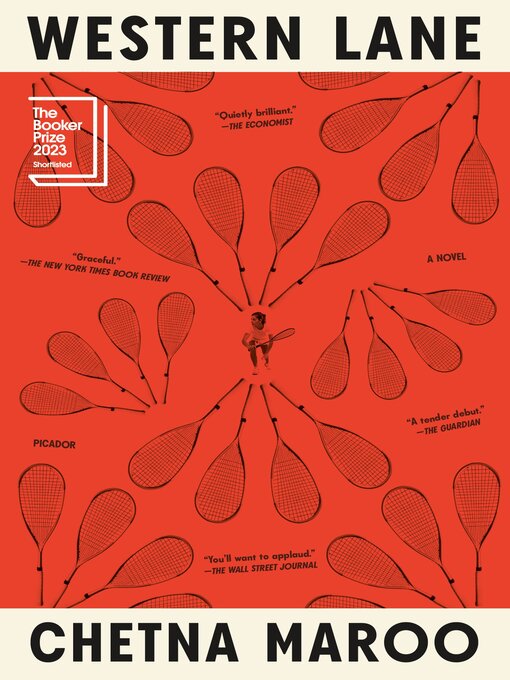
Book Review: Western Lane

Chetna Maroo's Western Lane is a relatively short, quiet coming-of-age novel.

Set in 1980s London, it follows a family in turmoil after the death of their mother. Gopi emerges as a particularly talented squash player, and trains under the watchful eye of her hollowed-out father. As her on-court skills become apparent, she devotes more time to the sport, and begins to distance herself from her two sisters.

Image via Indianapolis Public Library

This is a "quiet" book with lean prose that seldom hits the reader over the head. As I'm not well versed in the sport of squash or the '80s squash scene (that Jahangir Khan, referenced many times in the book, was quite the player!), some of the references required context clues and the occasional Google search for me to understand.

The dynamics of grief and coping, however, require no Google searches. This is where the book excels, with Gopi, who narrates from a first-person perspective, doing all the heavy lifting. While a short read, there is a heaviness to this book, the pervasive sense that things aren't right and may never be right again.

As she navigates grief and loss, she also diligently practices on the court. Her squash abilities, practiced with precision at Western Lane, the local sports complex, grow and it's clear she's the best among her three sisters. Her father oversees her constant training, and the two watch old tapes of professional matches to sharpen her skills and understanding.

She also meets Ged, another talented squash player whose mother works at Western Lane. The two train together and Gopi clearly develops an affection for him. As this is a coming-of-age tale, she's not entirely sure how to proceed, nor does she completely understand the breadth of her feelings.

The book culminates in an out-of-town squash tournament. Gopi makes it to the final. Will a victory signal her triumph over grief or leave her unsatisfied?

The book explores themes of grief, coping, family pressure, adolescence, and heartbreak. I give it a recommendation for its unique cultural perspective (a Pakistani family living in '80s London) and restrained, often beautiful writing.


Wednesday, June 10, 2026

Book Review: Home Is Where the Bodies Are

This one had nothing to do with comp titles or finding something similar to my work in progress, making it (like Batman Revolution) a pure pleasure read.

Jeneva Rose's Home Is Where the Bodies Are is page-turning thriller with a simple enough setup. The family matriarch is dead, and three estranged siblings gather in their Wisconsin hometown to take care of funeral arrangements and sift through her belongings.

Their father disappeared years ago, splitting the family apart. We experience the story through the differing perspectives of the three siblings. Beth, the oldest, never left home and cared for their mother; Nicole, the middle child, struggled with addiction throughout her adult life; and Michael, the youngest, left home and went on to have a lucrative career in the tech space.

Image via Indianapolis Public Library

They don't get along at all, and old hurts quickly go from a simmer to a boil. They fight about their pasts, opportunities unfilled, their strained relationship with their parents and each other, money, and all the other things families tend to bicker about over the course of their lives.

While going through their mother's belongings, they come across a videotape that appears to implicate their parents in the case of a little girl whose death became a high-profile blight on the town. In the video, their father is covered in blood and their mother agrees to help him hide the body.

Is their father a killer? Is that why he disappeared years ago and was later presumed dead? What possible justification could their parents have for trying to cover up a little girl's death?

Slowly but surely, the siblings follow the clues and tease out new bits of information. Expect shocking revelations and some twists that may require the slightest suspension of disbelief in order to swallow. 

I'm sure frequent mystery readers will have it figured out less than midway through, but I found it to be a generally absorbing read.

Wednesday, June 3, 2026

Book Review: The Immortal King Rao

If a shifting, nonlinear narrative that plays out over the course of decades sounds like your idea of a good time, then The Immortal King Rao by Vauhini Vara should be a blast.

This is another book that came up as a suggestion for a quiet apocalypse with the bonus element of being flashback-driven like my current work in progress. I think it's too risky as a comp title.

Still, I found a lot to admire here. I can't even imagine trying to cram the plot into a brief summary, let alone the standard one- or two-page synopsis required during the book submission process. King Rao, born on a coconut farm in India, eventually moves to America and becomes the most influential tech titan of the twentieth and twenty first centuries.

Image via Indianapolis Public Library

His daughter, Athena, is currently imprisoned, having been accused in his death. Oh, and King Rao has implanted his memories in her mind, using a digital mind-link to do so. The frame story is from Athena's perspective as readers learn about King Rao's modest origins, his move to the United States, his fascination with computers, and his first meeting with the love of his life.

It all leads to his creation of an Apple-like company ("Coconut") so thoroughly dominant in the technological sphere that it essentially becomes a world government. This tech hegemony aims to "free" people but ends up oppressing them instead, leading to the formation of a radical group determined to unshackle themselves from technology altogether. Athena joins this group, and is accused of murdering King Rao. She awaits judgment from an algorithm.

In the background, the Earth is undergoing an environmental crisis from climate change. With King Rao dead, it's clear no one has the willpower to stop it.

Needless to say, Vara packs a lot into this novel thematically. It's a sweeping family saga, a cautionary tale about oligarchs and corporatocracy, a warning about global warming and collective indifference, an examination of the role of technology in culture, and an exploration of the true meaning of freedom.

It is a fascinating read and not something I would normally expect to pull off the shelf. The narrative is a little overstuffed and some readers will experience whiplash from various time jumps and intercutting. Still, I think it's worth reading for the clever prose and excellent worldbuilding.

Wednesday, May 27, 2026

Book Review: Batman Revolution

Batman Revolution by John Jackson Miller is the sequel to Batman Resurrection. These books are set in the Michael Keaton Batman continuity, with Resurrection serving as a direct sequel to the movie. Revolution, then, is the direct sequel to Resurrection, picking up a few plot threads from the previous book and the 1989 film that preceded both works.

For me, it means spending more time with Keaton's Bruce Wayne/Batman, Michael Gough's Alfred Pennyworth, and Pat Hingle's Commissioner Gordon. I loved the 1989 Batman movie. For all the talk of the Christopher Nolan movies--a solid trilogy without argument--Keaton is my Batman and Jack Nicholson my Joker. Being able to return to that gothic Gotham City is a real pleasure.

Image via Indianapolis Public Library
The books take place before Batman Returns, the 1992 sequel that 12-year-old Matt loathes and present-day Matt barely tolerates. Some of the stronger aspects of the movie sequel are present here, including Selina Kyle and Max Shreck. Selina is the sweet-natured, overburdened assistant struggling through life while Shreck continues his scheming ways (being able to picture Christopher Walken delivering lines as Shreck is wonderful). I also appreciate getting more of Robert Wuhl's Alexander Knox.

We spend a fair amount of time with Bruce and Alfred, and while Batman gets top billing in the book, be prepared for A LOT OF Norman Pinkus. He's the "puzzle master" for the local newspaper and creates a sensation with "Riddle Me This," a daily word puzzle with mind-bending clues and cash prizes. People love it so much, it's helping the Gotham Globe sell like hotcakes, although the always put-upon Norman gets zero credit for its success. National syndication is a certainty!

Norman may be the most intelligent man in the world. He's definitely the smartest guy in Gotham City, even if no one recognizes it. When he's not creating "Riddle Me This," he's also tracking crimes and providing the Gotham City Police Department with tips.

When revolutionaries sweep into Gotham City to upend what they view as an unjust, decadent government, Norman gets swept along right with them. Perpetually overlooked and underappreciated, he finds fresh start with the revolutionaries and takes on the persona of The Riddler, the smartest man in town.

He matches wits with Batman without understanding the true scope of the revolutionaries' plot. He's the bad guy but not really the bad guy, just an overlooked peon who convinced himself he was meant for greater things.

I found this to be a pretty engaging read, although I liked Resurrection more, probably because it had a direct connection with the 1989 movie by exploring Smylex (the secret ingredient--smile!) and the fallout from The Joker's plot. 

As Norman is essentially a co-protagonist in the novel (you could argue he's the main protagonist), readers will spend a lot of time with him. His "poor me, poor me" shtick did wear me down a little at times, but it is all ultimately in service of making his turn as The Riddler believable. I would've probably trimmed a chapter or two with Mr. Pinkus. I can still hear him whining about his life.

Still, the book has plenty good Bat-action and gives me another chance to spend some time with Bruce and Alfred, and for that, I'm grateful.

Wednesday, May 20, 2026

Book Review: North Dallas Forty

North Dallas Forty is one of the most famous (or infamous) football books ever written. In the semiautobiographical account by Peter Gent, we spend a week with a wide receiver (a semi-fictionalized version of Gent named Phil Elliott) to learn about the wild, chaotic, and insane world of pro football.

Vindictive coaches, racism, violent men, drugs, alcohol, and sex, it seems, were inescapable in the late '60s and early '70s football scene. The men of the North Dallas Bulls certainly had some wild times!

Elliott, a reliable receiver with tremendous hands who's almost past his prime, struggles to find playing time. He relies on painkillers to get by on a daily basis and stay out on the field. Wild parties fueled by drugs, alcohol, and sex permeate the narrative. Elliott's teammates range from a star quarterback to a completely unhinged lineman who would've terrified anyone who had to be in the same room with him.

Image via Indianapolis Public Library

The weeklong narrative provides a window into what pro players go through just to get on the field on a week to week basis. Sunday's game takes a physical and mental toll on them that they have to work through only to repeat it on gameday. They cope in various ways (for Elliott's teammates, it tends to be the aforementioned parties). Brutal injuries are treated with oral medication, shots, and indifference.

The book won't be for everyone. Violence, swearing, and sex are unavoidable, along with depictions of drug use and substance dependency. These things are endless. That said, it also mines some (often ribald) humor and provides a window into racial integration. 

Elliott's existential crisis--wondering what he'll do with his life once his football days are over--does bring some gravitas to the narrative. It also appears he may find some semblance of happiness with Charlotte, a woman he meets at one of the parties and pursues (while also having sex with the fiancée of one of the team executives).

Nick Nolte starred in the movie adaptation, released in 1979, and it's a happy-go-lucky account compared to its inspiration. As for the book's ending, well, let's just say I didn't see it coming. It's dark, upsetting, and unexpected. 

Wednesday, May 13, 2026

Book Review: Eruption

I'm a sucker for Michael Critchton novels.

Jurassic Park and The Andromeda Strain are two of my favorite all-time books. Crichton had a talent for taking a scientific concept, making it tangible, and telling propulsive stories with likeable, intelligent characters who try to solve the problem and avert disaster.

Eruption has the hallmarks of a Michael Crichton novel: an ecological disaster, a determined geologist, a race-against-the-clock narrative, cinematic set pieces, and a rival faction. Crichton died in 2008 at the age of 66, but a few of his books have been posthumously published (Pirate Latitudes, Micro, Dragon Teeth, and Eruption). 

Image via Indianapolis Public Library

James Patterson is listed as a coauthor on Eruption (published in 2024), which was a partial manuscript found in Crichton's archives after his death. Basically, one mega-author stepped in to finish the novel started by another mega-author. The results are pretty much what you'd expect, a high-concept thriller ripe for a movie adaptation.

A cataclysmic eruption is set to destroy Hawaii, and only the determined efforts of John "Mac" MacGregor and his team can stop it. You can feel Crichton's fingerprints all over this one: experimental technology, secret government facilities, a resolute protagonist determined to think his way out of trouble.

The book proceeds at a breakneck pace--it's a page-turner--along with hooky, cliffhanging chapters daring you to go, "Okay, just one more and then I'll stop." 

It's not perfect. Characters survive unsurvivable situations in the unlikeliest of ways, but that's part of the charm of a Michael Crichton novel. Don't expect deep character work, either, because we all know the characters are really there to drive the plot forward. Expect a fair amount of jargon-heavy exposition because, well, that's part of the deal, too. At least it keeps moving at a good clip.

All in all, it felt like mid-tier Crichton. I would never rank it above Jurassic Park or The Andromeda Strain, but I would personally rank it above the likes of Sphere and Congo. Worth it for most readers, although the diehardest of diehard Crichtonists may be disappointed. 

Wednesday, May 6, 2026

Book Review: The Wax Pack

Every once in a while, you see a concept for a book and go, "Man, I should've thought of that."

That was my reaction to Brad Balukjian's The Wax Pack. I mean, just look at the freaking cover.

As a kid Balukjian, collected baseball cards. He delighted in the old Topps wax packs with their stick of pink, teeth-shattering bubblegum. Once he reached his mid-30s, he decided to buy an unsealed pack of 1986 Topps cards and then track down the men whose cards he found inside.

It's such a clever conceit for a story, and this nonfiction book serves as a road trip adventure and a jolt of baseball nostalgia for fans of a certain age. Published in 2020, Balukjian tells the stories of 14 men inside his pack (the 15th card was a checklist)--a mixture of stars, everyday role players, and a few "now here's a guy" names.

Image via Indianapolis Public Library

The narrative reveals a tremendous amount about the individual players--even the ones he fails to meet in person--and the author himself, as he grapples with his own insecurities and travails. While Balukjian's vivid account is aimed squarely at baseball fans, I think it's accessible for all readers.

The players featured in The Wax Pack:

  • Don Carman
  • Jaime Cocanower
  • Vince Coleman 
  • Al Cowens
  • Carlton Fisk 
  • Dwight Gooden 
  • Richie Hebner
  • Lee Mazzilli
  • Rance Mulliniks
  • Gary Pettis
  • Randy Ready
  • Rick Sutcliffe
  • Garry Templeton 
  • Steve Yeager
Many of the former players are more than willing to talk to Balukjian, some of them even inviting him inside their homes for a family event, such as Cocanower, who hosts him for July 4. Rick Sutcliffe comes off as particularly warm and likeable, sharing stories of his pro career and many comebacks.

All of the players Balukjian meets in person have something to offer--lamentations of untapped potential, stories of distant fathers and tough childhoods, or insights into the toll the game takes on a soul. 

Many of them have stayed attached to the baseball, whether as broadcasters, coaches, minor league managers, or consultants. Don Carman, one of the author's favorites as a kid, turned his baseball life into a career as a sports psychologist who works with super-agent Scott Boras and serves as a sounding board for struggling players.

You'll find the requisite stories of life on the road, marriages that didn't last, and the daily grind of playing 162 games in a season. The men share stories of draft days and signing bonuses and the unbreakable bonds they forged with teammates. Balukjian visits the hometowns of many of his subjects as he crisscrosses his way from California to Texas, Florida, Massachusetts, New York, and Las Vegas, putting thousands of miles on his faithful Honda Accord and consuming an astonishing amount of coffee.

The author and players tend to shy away from their career-defining moments, as most of those have been covered ad nauseum, such as Mazzilli's postseason heroics for the 1986 New York Mets during their championship season. Balukjian said he could offer no further insights into such moments, although fans unfamiliar with them may need to consult Google (I had only a vague recollection of the '86 Mets, for example).

Readers will even glean some insight from the players who don't meet with Balukjian. Cowens died in 2002, well before Balukjian's cross-country trip. A phone conversation with Cowens' son reveals how his father's late-life struggles led to a personal religious revival and a tragic end. 

Fisk, sort of a looming background antagonist in the piece, comes off as a less-than-flattering figure, using surrogates to rebuff the author's attempts to contact him and suggest Balukjian's project is beneath him. At one point, Fisk's agent calls Balukjian and rattles off a long list of reasons Fisk couldn't possibly spare an hour to share a story or two. It made me perceive the Hall of Famer as trite and out of touch.

Doc Gooden, who had agreed to meet with Balukjian as long as he got paid, ghosts the author during their planned time together. It's heavily suggested that Gooden, whose meteoric rise led to a sudden descent into drug addiction, may have suffered a relapse around the same time. Some demons are inescapable.

Also, if you always thought Vince Coleman was a jerk, Balukjian finds nothing to dispel that notion.

The Wax Pack is an insightful read filled with heart and humor. Highly recommended, even for those who aren't baseball fans.

Wednesday, April 29, 2026

Book Review: The Silence

If Don DeLillo is an acquired taste, I have yet to acquire it.

This short novel--it's more of a long short story or a novella--follows rapid societal collapse after all electronics stop functioning on Super Bowl Sunday in 2022. I can see why this would come up as a "quiet apocalypse" novel for my work-in-progress as it specifically involves a significant disaster on Super Bowl Sunday.

It follows a handful of characters who gather in a Manhattan apartment to watch the big game. Two of them are late arrivals after something happens at the end of their flight.

Image via the Indianapolis Public Library

The world's electronics go dark. There are no phones or tablets or televisions to serve as distractions.

I found the whole thing intensely bizarre. The characters spend much of the novel delivering monologues that sound nothing like real people. Just long strings of dialogue full of existentialist nonsense.

I'm just glad it was short. The Silence is definitely not my cup of tea. Unrealistic, inhuman characters aren't my thing.

Wednesday, April 22, 2026

Book Review: A Children's Bible

Like Leave the World Behind, A Children's Bible by Lydia Millet is another novel that comes up for those seeking quiet apocalyptic fiction (we are LEGION).

The title, taken from the discovery of a Bible found by one of the young characters, is literary fiction with a YA-friendly hook. On a surface level, the book revolves around a group of adults and kids who take over a summer home. The adults use this as an opportunity gorge on alcohol, drugs, and sex. They take away the kids' cellphones.

The children, mostly adolescents with a few kids thrown in there, have drifted apart from their parents. A rift forms between the two groups, with the kids blaming their parents for the state of the world, which is undergoing rapid changes--a radical, quiet, background environmental apocalypse. The kids are disillusioned at the adults' lack of care for the world in which they live and the future of that world.

The point of view character is Eve, a teen who narrates the novel. The world is filtered through her observations and interpretation of events. She is very close to and protective of her younger brother Jack. Eventually, a powerful storm arrives, forcing the kids to flee and separating them from the adults, who really don't seem to care all that much?

Image via Indianapolis Public Library

Jack comes across a copy of a book called A Children's Bible and tries to understand its teachings. At one point, he and another child begin collecting animals, just like Noah. This is not the only subtle/hit-you-over-the-head biblical allusion/allegory, but it is the one shown on the cover and most obvious by extension.

Eventually, the kids end up on a farm stocked with food and supplies. This appears to be the perfect place to seek refuge and the groundskeeper, Burl, is kind and allows them to live there as long as they adhere to the ground rules set by the absent property owner. For a time, the kids appear to thrive, but then a group of armed men descend on the farm, ravage the supplies, terrorize the kids and Burl, and generally despoil what could have been an idyllic place to live.

I found this to be a relatively quick read. Like Leave the World Behind, some readers will find it moody and uneventful. I liked Eve and her relationship with her brother. I also found the adults' lack of care and responsibility haunting--they were incapable of dealing with the reality their decisions created and simply chose to abandon it.

It's hard to get a read on the "world" of A Children's Bible. The parents are wealthy people of privilege, yet we also encounter Mad Max-type ruffians who hoard resources and delight in cruelty. The focus is narrow, although intentionally so, I suspect. The novel also has some biblically inspired occurrences and characters. And for as much trouble as Eve and her friends get into, it seems like there's always someone there to bail them out.

For the most part, I enjoyed this one--probably more than I liked Leave the World Behind. It think it's more accessible for reader. But again, your mileage may vary.

Wednesday, April 15, 2026

Book Review: The Throwback Special

In my quest for comp titles, The Throwback Special by Chris Bachelder came up. The premise of this relatively short novel is killer: 22 middle-aged men gather every year to recreate "The Throwback Special," the play that ended the career of quarterback Joe Theismann.

For those in need of a refresher, the grisly play happened during a November 1985 Monday Night Football game between the Washington Redskins and the New York Giants. Washington ran a flea flicker, and when running back John Riggins pitched the ball back to Theismann after the handoff, the quarterback was already feeling the heat from the Giants defense. All-World linebacker Lawrence Taylor pulverized Theismann, whose leg snapped in vomit-inducing fashion on national television.

It ended up being the last play of his career. During the hit, Theismann recalled, his leg "snapped like a breadstick." It is one of the grisliest plays in football history. I don't suggest searching for the video online unless you're a psycho with a strong stomach.

With that very specific setup out of the way, The Throwback Special follows a group of men who recreate the play every year. They have very specific rules and pick their roles via an annual draft. Participants, for example, are only allowed to play Lawrence Taylor or Theismann every few years and everyone must serve at some point as an offensive or defensive lineman.

Image via Indianapolis Public Library

Certainly, the premise is interesting. These guys gather once a year and don't really know each other despite all the time they've spent together (it's been going on for 17 years). They watch film, they hold a draft, they order pizza, they swap stories, they lament problems at home and in marriages. 

Readers are introduced to a dizzying number of characters in a short span of time, and it's hard to keep up. Admittedly, some of these characters are memorable ("Fat Mike," for example, is an ironically named athletic Adonis and Carl is a barber who doesn't really like cutting hair every year).

The strength of the novel is the characters' collective adherence to tradition and ritual. Life isn't easy and recreating "The Throwback Special" grants them escape and release, at least for the weekend. Bachelder infuses the novel with plenty of dark humor. 

But because of the number of characters and the brevity of the narrative, he doesn't have much time to develop these valiant competitors. As a result, we get only sketches of these men and their dedication to the task--stylistically, I suppose readers come to know them just about as well as their fellow participants do over the span of more than a decade and a half.

It won't be for everyone. While football is at the center of the plot, the book doesn't spend much time talking about the game or, really, even the play itself. But you will walk away with one important understanding: Mark May always does his job.

Wednesday, April 8, 2026

Book Review: Leave the World Behind

Not every apocalypse needs to be a ridiculous, large, destructive spectacle.

That's one of the things I learned while reading Leave the World Behind by Rumaan Alam.

As I'm in the middle of revising/pitching an apocalyptic book of my own, this came up as a possible comp title. I have the feeling this one, published in 2020, gets brought up a lot.

The plot here is simple: a family shows up at their rental home for summer vacation expecting to get away from it all. Their vacation, however, is interrupted when people claiming to be the rental property's owners show up and ask if they can stay.

The renters, a family of four, don't trust these new guests, a wealthy couple who also happen to be Black. Their initial distrust, rooted in at least some racial bias, eventually gives way as it becomes clear something is happening in the outside world. 

Image via Indianapolis Public Library

New York City has experienced a significant blackout, but the rental home still has power. The televisions no longer receive a signal and the internet is down, making it nearly impossible to decipher what's going on in the world at large. On multiple occasions, they hear military jets speeding overhead.

It's unclear what's causing all of this--including a strange deer migration--but the lack of clarity is the point. The world is coming apart at the seams, whether that's due to war or ecological disaster or economic collapse. It doesn't really matter. The family and homeowners must learn to trust one another if they have any hopes of surviving. That trust is not easily earned.

This book won't be everyone's cup of tea. The narrative takes its time, even in a relatively short book. Don't expect any explanations, just a lot of atmosphere and character work. The writing, to me, came off a little self-indulgent at times. It seemed like Alam wanted to let everyone knows about his expansive vocabulary. Some mundane detail work, in my opinion, is also a little overdone.

I'm also not sure I liked many of the characters. They are well drawn but seem to lack common sense or compassion. They come off as selfish, which I'm certain is a product of authorial intent, as the book explores themes of race, class, and consumer culture. I think it's worth reading, if just for the pervasive sense of dread and the quiet, resigned nature of a dying world.

Without a doubt, this is a novel that invites discussion (and judging by some of the reviews, a considerable amount of division!).

Wednesday, April 1, 2026

Book Review: The Cactus League

I made a resolution this year to read more books. Part of this was because reading improves your writing. Part of it was because I found myself pretty deficient in the current marketplace. Part of it was that I needed comp titles for a book I wanted to pitch to agents.

The Cactus League (2020) by Emily Nemens came up as a possible contemporary comp because my work-in-progress explored the intersection of sports, character, and media.

Across its nine chapters, The Cactus League is about baseball, yet it's not. Each chapter tells a different story from a different point of view character. It all happens during spring training in Scottsdale, Arizona, for the Los Angeles Lions, a fictional MLB team. In the end, most of these narrative threads intersect.

Observing all of this is a sportswriter who provides a story-within-a-story of his own about Jason Goodyear, an absurdly talented baseball player whose gambling addiction derails his marriage and baseball career. Goodyear isn't the main character of the book, as there are many protagonists within the interlinked narrative, but he and his Lions are foundational to the story.

Image via Indianapolis Public Library

From the public's point of view, Goodyear is Baseball's Golden Boy, the next great superstar. Privately, however, he's a mess, indebted to loan sharks and even pilfering money from a rookie prospect who received a modest signing bonus.

The novel plays more like an interlinked anthology than anything, as the individual chapters tell stories from the points of view of different characters. While elements of the stories are connected, they're not obsessively interlinked, serving as side stories to the same overall narrative. I'm not explaining this very elegantly, but it works well enough.

At first, this approach threw me off. The first chapter is about a hitting coach who's back for spring training and discovers someone has broken into his house and lived there during the offseason. The next chapter follows a woman with a, let's just say "special," love of ballplayers. She encounters Goodyear and the two end up sneaking into Frank Lloyd Wright's Taliesin West, where Goodyear gets arrested after doing some property damage. 

Typically, you'd expect to come back to the Chapter 1 and Chapter 2 narrators as POV characters in the book, but that never happens. Subsequent chapters introduce new POV characters with new problems and plots. If a previous POV character reappears, they're a side character, a reference, or ancillary to the chapter's plot.

Some readers won't like this approach. Once I acclimated to it during the third chapter ("Oh, that's how this is going to go"), then I was fine with it. The individual stories are all well done, although I thought the sportswriter tangents were a bit much at times. 

The novel excels in its affection for baseball and spring training. You can tell Nemens is a baseball fan and most of the details land. There are some curiosities, like a pitcher who tosses a complete game in spring training, but overall, I think it's a searing double into the gap. Baseball is a ritual, and Nemens teases a lot of drama out of it.

On a personal level, it's neat that it was set in Scottsdale, Arizona, because that's where my wife and I went on our honeymoon about 20 years ago. Some of the sights and roads were familiar to me, and we actually visited Taliesin West on our trip.

Friday, March 27, 2026

Book Review: The Art of Fielding


Image via the Indianapolis Public Library

Baseball season is underway, and while the Reds are off to another tremendous start (a 3-0 loss to the Boston Red Sox on Opening Day), it seemed fitting to publish this review.

When it comes to sports fiction with a literary bent, you'll be hard-pressed to find many suggestions aside from The Art of Fielding by Chad Harbach.

This book was a sensation in 2011. It only took me 15 years to get around to reading it. 

The novel is about baseball. Growing up. College life. Relationships. The burden of expectations. The fear of success.

Henry Skrimshander is an immensely talented shortstop, a human vacuum cleaner with a rocket arm at the most challenging defensive position in the infield. Brought to Wisconsin's Westish College at the behest of his mentor and (mostly) friend Mike Schwartz, Henry excels at his craft. He's obsessed with a fictitious book called The Art of Fielding by equally fictitious MLB player Aparicio Rodriguez, one of the all-time great defensive shortstops.

Though slight in stature, Henry excels and attracts the attention of professional scouts, who travel from all around to the remote Wisconsin college to see the kid play. He eventually closes in on the errorless streak set by his hero (Rodriguez) before encountering the worst case of the yips ever recorded. Suddenly and without reason, Henry loses confidence. His first career error is a throw that sails wide of first base, clocking a teammate in the head as he sits in the dugout.

The error doesn't count thanks to a technicality (it ends up being a shortened game, and the results revert back to the previous inning, meaning Henry's error didn't happen), but Henry is a mess. While he's still a capable hitter, he can't throw the ball to first base, double- and triple-clutching as he tries in vain to do something he's done thousands of times before. He's Steve Blass and Chuck Knoblauch and Rick Ankiel and Steve Sax, all major leaguers who suddenly and inexplicably developed "the yips," the inability to locate the strike zone and/or make routine throws.

He can't escape that moment. The perfection he chased, and the big-league interest he attracted, are gone. Henry's not humbled. He's humiliated and eventually hangs up his cleats. In the meantime, the Westish Harpooners, a perpetual punching bag in their conference, make an unlikely championship run with their best player sidelined by doubt and inutility.

Various subplots include Henry's strained mentor-mentee relationship with Schwartz, the team captain and catcher who creaks when he walks and finds comfort in various painkillers and sedatives; the tragic relationship between college president Guert Affenlight and an exceptional male student named Owen (at first a rarely used player on Henry's and Schwartz's team and also Henry's gay roommate); and Schwartz's growing attraction to Affenlight's daughter, Pella.

This is a sprawling, lengthy novel (maybe even slightly overstuffed) that demands a lot from the reader. The text can be dense, filled with literary allusions and wordplay. It is definitely a literary novel that screams "I'm a literary novel that's not just about baseball but existential stuff, too!" Overall, though, the small college setting and baseball scenes won me over.

I do think Henry is a bit of a cipher. You like the kid and you root for him, but you just don't feel like you know much about him. Other characters, especially Schwartz, are more convincingly drawn. It also overreaches at times and becomes bogged down in its many subplots, stealing momentum away from the main narrative.

That said, it's a memorable book with solid characters and, at times, some inspired humor. Let's call it a ground rule double. 

Tuesday, March 24, 2026

Book review: Project Hail Mary


Image via Wikipedia

This will contain spoilers for the book (and, by extension, the movie adaptation)

Project Hail Mary is the third novel from Andy Weir, following The Martian and Artemis. While I've read The Martian, I haven't read Artemis

The Martian told the story of an astronaut stranded on Mars who's forced to use his wits and scientific knowledge to survive. You'll find a lot of that DNA in Project Hail Mary.

Ryland Grace wakes up alone on a spaceship, his thoughts in complete disarray. He can neither remember his name nor his mission. Two other people on the ship are dead, and he has no idea who they are. Slowly but surely, at key points, Grace recalls the critical moments that brought him to the ship, Hail Mary, and the urgency of his mission.

The sun is dying, beset by a mysterious, sun-altering phenomenon known as the "astrophage." Unless Grace can find a way to stop the blight, the sun's light will diminish and Earth will cool to cataclysmic temperatures, first ending life as we know it, and then, all life entirely. It will be a cruel, slow process.

The flashbacks show how Grace came to the attention of Eva Stratt, the administrator of a global effort to study the astrophage, to help other scientists understand the organism and how to combat it. We also learn Grace is no trained astronaut--he's a middle school science teacher who once had grand ambitions as a scientific researcher.

The project to save humanity, "Project Hail Mary," intends to send a team of astronauts to Tau Ceti, the only star within traveling distance that doesn't seem to be affected by the astrophage. By studying Tau Ceti, Earth's greatest minds hope they can find a way to stop or contain the astrophage. What unique characteristics does that star have? Are they something that can be translated to Earth?

WARNING: MAJOR SPOILERS FOR THE BOOK AND MOVIE

While getting his bearings, Grace notices another blip on the scopes. As it turns out, he's not alone--another ship is also in the system, ostensibly to study Tau Ceti. He ends up making contact with an alien species, a landmark occurrence, and tries to understand a mysterious visitor who appears to be able to build anything.

After some back and forth and some false starts, Grace befriends the extraterrestrial, which he dubs "Rocky" since he's essentially, for lack of a better term, a rock spider. Because of his divergent biology, Rocky sees the world very differently than Grace and communicates through harmonization/music. Grace, through much trial and error, creates a program that translates Rocky's vocalizations into English.

The two are there for the same reason: Rocky's home planet is also besieged by the astrophage. He's been in the Tau Ceti system for more than 40 (human) years and the rest of his crew died many years ago. Due to their planet's atmosphere, Rocky and his fellow Eridians didn't know anything about radiation or UV shielding, thus the other members of his crew died from radiation poisoning. While intelligent, the Eridians don't know about relativity. Rocky is a skilled, crafty engineer.

Eventually, the two discover a nearby planet (dubbed "Adrian" by Grace) has evolved a predator that can keep the astrophage at bay. Grace and Rocky collect a sample--both almost die in the process--and Grace begins developing strains of the predator (taumoeba) that he and Rocky can take to their respective homes to save their suns and prevent mass annihilation.

Humorous, science-based, and full of unexpected heart, Project Hail Mary is an absolute triumph. The relationship between Grace and Rocky is everything and you grow to care about both of them. Desperation brought them together, but the two form an inseparable bond. They laugh together, they bicker, they fuss, they weigh their options, and solve problems together. 

I just found it incredibly fun and moving.

The flashback structure works better in the book than the movie, giving Grace and Stratt more context and cohesion. We also learn the extreme lengths Stratt is willing to go to in order to make sure the mission is successful, something that is made apparent in the movie but is really hammered home in the novel.

If I had one narrative gripe, it's probably one of the final flashbacks in which we learn Grace refused to go on the mission voluntarily. I understand his reasoning--and I understand the message of the book is that we can become something greater, even if we don't expect it within ourselves--but it seemed like an unnecessary departure from the Grace we came to know throughout the course of the mission.

I saw it as a twist for the sake of a twist, but your mileage may vary.

I understand his reluctance and fear, I do, but I'd like to think, given the situation, he'd be more willing to rise to the occasion (ultimately, he does meet the moment) without being forced to go, especially when it's abundantly clear he's the best and only option at that point. A minor haggle, to be sure.

All in all, Project Hail Mary is a tremendously imaginative adventure. At its core, it's a story about a friendship forged through adversity, love, and brotherhood. Highly recommended--and the movie adaptation rocks.