
Chetna Maroo's Western Lane is a relatively short, quiet coming-of-age novel.
Set in 1980s London, it follows a family in turmoil after the death of their mother. Gopi emerges as a particularly talented squash player, and trains under the watchful eye of her hollowed-out father. As her on-court skills become apparent, she devotes more time to the sport, and begins to distance herself from her two sisters.
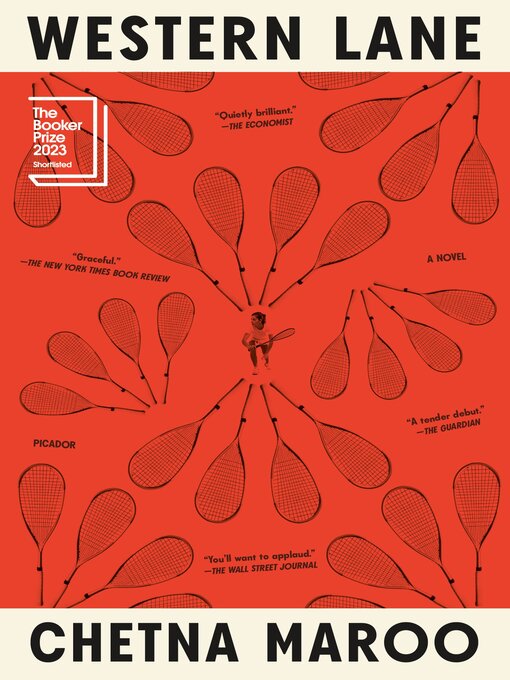 |
| Image via Indianapolis Public Library |
This is a "quiet" book with lean prose that seldom hits the reader over the head. As I'm not well versed in the sport of squash or the '80s squash scene (that Jahangir Khan, referenced many times in the book, was quite the player!), some of the references required context clues and the occasional Google search for me to understand.
The dynamics of grief and coping, however, require no Google searches. This is where the book excels, with Gopi, who narrates from a first-person perspective, doing all the heavy lifting. While a short read, there is a heaviness to this book, the pervasive sense that things aren't right and may never be right again.
As she navigates grief and loss, she also diligently practices on the court. Her squash abilities, practiced with precision at Western Lane, the local sports complex, grow and it's clear she's the best among her three sisters. Her father oversees her constant training, and the two watch old tapes of professional matches to sharpen her skills and understanding.
She also meets Ged, another talented squash player whose mother works at Western Lane. The two train together and Gopi clearly develops an affection for him. As this is a coming-of-age tale, she's not entirely sure how to proceed, nor does she completely understand the breadth of her feelings.
The book culminates in an out-of-town squash tournament. Gopi makes it to the final. Will a victory signal her triumph over grief or leave her unsatisfied?
The book explores themes of grief, coping, family pressure, adolescence, and heartbreak. I give it a recommendation for its unique cultural perspective (a Pakistani family living in '80s London) and restrained, often beautiful writing.
