

Showing posts with label ebooks. Show all posts
Showing posts with label ebooks. Show all posts
Friday, August 12, 2011
Guest blogging at Superhero Nation!
One of my favorite writing sites posted a guest blog I pitched a week or so ago.
Confused by this whole ebook thing?
Check out Superhero Nation for a primer.

Friday, July 22, 2011
Take Five with Dementius

Today's interview is with Dementius, former Baron-Count-Lord-President-Sir-Supreme Leader-Emperor (and Tsar) of the defunct United States of Dementius. Captured by the Interstellar Justice Corps, the ex-despot is detained within an IJC facility, where he's (for some reason) still allowed to wear his infamous suit of armor.
MATT: How's the food here?
DEMENTIUS: I find it decent enough. They serve pudding on Fridays. So it's Pudding Day.
MATT: You've prided yourself on being the supervillain who doesn't fall prey to the foibles of supervillainy. Yet here you sit in a maximum-security IJC facility, where you await trial. How does this make you feel?
DEMENTIUS: Insightful question. (grumbles something unintelligible) My idiotic supervillain contemporaries never had vision. Their plans were small-minded. Capture the heroes. Depower the heroes. They needed to do more. They needed to kill the heroes. So that is what I did. And it worked.
MATT: When your plan worked--and I know you expected it to work--what did you think would happen next?
DEMENTIUS: It didn't quite happen as I expected. The president of the United States was dead and Congress immediately caved in. I thought they'd fight back. I thought the other nations of the world would rally together to fight me. Instead, most of them just gave up. They surrendered to a single man and his small army of robot warriors. I did not anticipate taking control to be so easy.
MATT: I see. Take me back to the moment when you finally disposed of your arch-enemy Powerwynd. What happened?
DEMENTIUS: My Ultimation Ray expanded superpowers to uncontrollable levels. When I tracked down my bothersome foe--in addition to her powers, she was a dogged IRS agent who also went after my financials--I turned the weapon on her and watched as her powers reached uncontrollable levels. It was like a person-size nuclear explosion. Quick and satisfying.
MATT: One thing you did not anticipate was the way social media websites would shape the plight of superheroes and supervillains. What role did they play?
DEMENTIUS: Ick. Social media. Facebook. Twitter. YouTube. Turn the Ultimation Ray on me. (audible gagging sound) When my supervillain contemporaries started interrupting TV transmissions, their rants ended up on YouTube. When people started sharing those clips, The Daily Show and Talk Soup picked up those rants. They turned supervillains into jokes. Then, I discovered someone turned my image into a piece of "flair."
I set out to prove supervillains were no joking matter. It was a sweet irony when Brent Sussex--the interminable hero "Cyberclaw"--posted the location of the annual heroes meeting on Twitter. It was, for the most part, one-stop shopping. Finally, I had eliminated most of the heroes. I had finally...
(knock on the door, guard motions for me to leave)
MATT: I guess that's it. Thank you for your time.
DEMENTIUS: I'm not going anywhere.
Find out more about Dementius and his diabolical plot in "I Took Over the World for This?" available now on Smashwords and Kindle!
 |   |
Wednesday, July 13, 2011
Reader Mailbag, Take Two
Back in February, I brought you my reader mailbag, which featured a little Q&A session involving some "readers" and myself.
The tagline:
"Real questions from fake readers."
It was a fun little post, so I thought I'd do it again.
QUESTION: So, um, what happened to The Flying Trapeezius?
Logan from Ontario
ANSWER: Oh, it still exists (here's the proof), but it's more of an archive now. I've decided to concentrate my efforts on My Kingdom for a Novel (or a Short Story). It serves the same purpose, minus the "autumn vomited here" layout from TFT. For better or worse, all my old posts are there.
QUESTION: You keep trying to sell stuff on your website. Now you've got a "Matt's Store" tab on the blog. Why are you selling out?
Annie from Tatooine
ANSWER: Listen, I used to be shy about this whole writing thing. I didn't talk about it much and kept it like a secret identity. But if I really want to do this--and I do--I have to be my loudest and best advocate. I'm trying to attract readers. I don't post a lot of my fiction on the blog--and maybe that will change--but the best place for people to get a sample is to visit Smashwords or Amazon.com. I'm not going to pretend I'm not trying to turn this into a career.
QUESTION: You're doing it again.
Annie from Tatooine
ANSWER: That's not a question. Next question!
QUESTION: So if you're making so much money by posting your work on Smashwords and Amazon.com, why haven't you bought a yacht?
Steve from Brooklyn
ANSWER: Whoa, there! I never claimed to be making money. In fact, I said "I'm not going to pretend I'm not trying to turn this into a career." My Smashwords stories are free right now (just use the code "SSWSF" on the site). My Kindle versions are 99 cents. In royalties from both platforms, I've made $3.00 because a couple Smashwords customers didn't use the promo code. And some guy bought a story in the Amazon UK store.
QUESTION: Will you buy me a value meal with all the writing money you've reeled in?
Vito from Sicily
ANSWER: I don't know where you're getting your value meals these days, but I want in.
QUESTION: When you made the ABC's of Writing, did you realize you could've used a lot of other options? Like, instead of using "Agent" for "A," you could've used a real writing term like "Analogy" or "Alliteration?"
James from Riverside, IA
ANSWER: I had multiple options for every letter in the alphabet. I was just going for terms that meant something to me. I may revisit the ABC's of Writing with another series of posts because I had a lot of fun putting it together. I'll think I'll go the Bases Loaded route and call it ABC's of Writing: Second Season.
QUESTION: What's with all the meters? Shouldn't you have one with Ray Liotta?
Brian from Indianapolis
ANSWER: The Peyton Progress Meter tracks the development of a book or story from draft to submission. The Reggie Miller Writing Continuum tracks my word count for any given day. The Joey Votto Meter tracks my short story success rate.
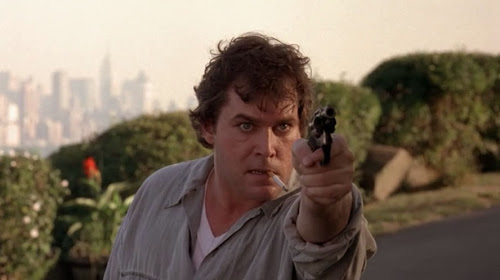
Ray Liotta? I think this blog could use a little Ray Liotta.
QUESTION: What's the deal with self-publishing? Are you considering it?
Jerry from Manhattan
ANSWER: Hmmm. Well, considering I've already posted a few stories on Smashwords and Amazon, I would say I'm more than considering it. I've already done it. Do I have the confidence to try it with a novel? I don't know. I'll have to think about it. I had a full request for one of my manuscripts, so I'm keeping my options open.
QUESTION: Do you have any exciting things planned for the future?
Dwight from Syracuse
ANSWER: I don't have any big blogging series coming up to rival the ABC's of Writing. At least, I haven't thought of any yet. I am considering doing an ebook superhero anthology. If I go forward with that, I'll have more news in the next few weeks.
QUESTION: Are you reading anything right now?
ANSWER: I bought a Kindle a couple weeks ago (my thoughts here). I just finished the first book of Michael R. Hicks' In Her Name: EMPIRE series (a review is forthcoming). I also read Pentecost by Joanna Penn (if I get into the groove, I'll try to review that, too). On deck: Swarm by B.V. Larson and The Pharos Objective by David Sakmyster.
The tagline:
"Real questions from fake readers."
It was a fun little post, so I thought I'd do it again.
QUESTION: So, um, what happened to The Flying Trapeezius?
Logan from Ontario
ANSWER: Oh, it still exists (here's the proof), but it's more of an archive now. I've decided to concentrate my efforts on My Kingdom for a Novel (or a Short Story). It serves the same purpose, minus the "autumn vomited here" layout from TFT. For better or worse, all my old posts are there.
QUESTION: You keep trying to sell stuff on your website. Now you've got a "Matt's Store" tab on the blog. Why are you selling out?
Annie from Tatooine
ANSWER: Listen, I used to be shy about this whole writing thing. I didn't talk about it much and kept it like a secret identity. But if I really want to do this--and I do--I have to be my loudest and best advocate. I'm trying to attract readers. I don't post a lot of my fiction on the blog--and maybe that will change--but the best place for people to get a sample is to visit Smashwords or Amazon.com. I'm not going to pretend I'm not trying to turn this into a career.
QUESTION: You're doing it again.
Annie from Tatooine
ANSWER: That's not a question. Next question!
QUESTION: So if you're making so much money by posting your work on Smashwords and Amazon.com, why haven't you bought a yacht?
Steve from Brooklyn
ANSWER: Whoa, there! I never claimed to be making money. In fact, I said "I'm not going to pretend I'm not trying to turn this into a career." My Smashwords stories are free right now (just use the code "SSWSF" on the site). My Kindle versions are 99 cents. In royalties from both platforms, I've made $3.00 because a couple Smashwords customers didn't use the promo code. And some guy bought a story in the Amazon UK store.
QUESTION: Will you buy me a value meal with all the writing money you've reeled in?
Vito from Sicily
ANSWER: I don't know where you're getting your value meals these days, but I want in.
QUESTION: When you made the ABC's of Writing, did you realize you could've used a lot of other options? Like, instead of using "Agent" for "A," you could've used a real writing term like "Analogy" or "Alliteration?"
James from Riverside, IA
ANSWER: I had multiple options for every letter in the alphabet. I was just going for terms that meant something to me. I may revisit the ABC's of Writing with another series of posts because I had a lot of fun putting it together. I'll think I'll go the Bases Loaded route and call it ABC's of Writing: Second Season.
QUESTION: What's with all the meters? Shouldn't you have one with Ray Liotta?
Brian from Indianapolis
ANSWER: The Peyton Progress Meter tracks the development of a book or story from draft to submission. The Reggie Miller Writing Continuum tracks my word count for any given day. The Joey Votto Meter tracks my short story success rate.
Ray Liotta? I think this blog could use a little Ray Liotta.

QUESTION: What's the deal with self-publishing? Are you considering it?
Jerry from Manhattan
ANSWER: Hmmm. Well, considering I've already posted a few stories on Smashwords and Amazon, I would say I'm more than considering it. I've already done it. Do I have the confidence to try it with a novel? I don't know. I'll have to think about it. I had a full request for one of my manuscripts, so I'm keeping my options open.
QUESTION: Do you have any exciting things planned for the future?
Dwight from Syracuse
ANSWER: I don't have any big blogging series coming up to rival the ABC's of Writing. At least, I haven't thought of any yet. I am considering doing an ebook superhero anthology. If I go forward with that, I'll have more news in the next few weeks.
QUESTION: Are you reading anything right now?
ANSWER: I bought a Kindle a couple weeks ago (my thoughts here). I just finished the first book of Michael R. Hicks' In Her Name: EMPIRE series (a review is forthcoming). I also read Pentecost by Joanna Penn (if I get into the groove, I'll try to review that, too). On deck: Swarm by B.V. Larson and The Pharos Objective by David Sakmyster.
Monday, July 11, 2011
The Kindle Experience: Two Weeks Later

About two weeks ago, I broke down and bought a Kindle.
I haven't been resistant to the "Ebook Revolution," but I haven't exactly been running toward it either.
As a reader, I wasn't sure what it would offer me. As a writer, I didn't know if it would have any utility beyond giving me a device on which to check the formatting of my stories.
So, two weeks later, a look at what I love, like, and hate about Amazon's bestselling e-reader. For full disclosure, I bought the Amazon Kindle with Special Offers (wi-fi only version) because I wanted to save a few bucks.
As a reader...
LOVE...
WHATEVER. WHEREVER. WHENEVER. I can read whatever I want, whenever I want it. Amazon has integrated its Kindle store onto the device, making it easy to browse and find books. Connect it to wi-fi, and I've got an entire bookstore at my fingertips.
WHAT BOOKMARK? If a phone call or something else interrupts reading time, the device remembers where I'm at, allowing me to pick back up right where I left off. If I'm reading multiple books at the same time, those are all bookmarked in the appropriate places.
NO MORE BOOK LUGGING. I'm not usually one to carry around multiple books, but I do it every once in a while. I don't have an extensive library on my Kindle (there are six books on it so far), but I don't have six books to lug around. It's nice.
NO EYE FATIGUE. It's like reading from a paperback. Really. I didn't believe it until I saw it for myself. I tried reading off an iPhone, but gave up because I didn't like the size of the screen and the backlighting became tiresome.
TRAVELS WELL. I took my Kindle on its first road trip this weekend. It performed admirably. Hotel wi-fi was easy enough to pick up and the device is light and easy to carry and/or pack. It was also easy to read while riding in the car, even in the sunlight.
GOOD BATTERY LIFE. My Kindle was down to about half battery power before the trip. After about two weeks of usage, I still had about 50% battery power. Since I'm sometimes overly cautious, I charged the device before heading off. Still, it seems like the device sips its battery power.
HATE...
BLACK FLASH! This really does take some getting used to. I'm talking about the quick "black flash" effect that happens when you turn from one page to another. The first time I read from my Kindle, I couldn't get over this. I didn't know if I ever would. It just takes a little time before this effect becomes second nature.
SOMETIMES FEELS LIKE A VIDEO GAME AND NOT A READING EXPERIENCE. While the Kindle marks your reading spot for you, a percentage meter at the bottom of the screen shows your reading progress. Sometimes, I expect to see "Achievement Unlocked!" when I hit the 50% mark of a book.
SLUGGISH INTERFACE. The refresh rate on the screen is nothing like you're used to on a computer or smartphone. Kindle's interface plods along, sometimes getting several steps behind your button presses as the device tries to keep up. It's noticeable.
IT'S NOT THE KINDLE'S FAULT, BUT I WANTED TO TOUCH THE SCREEN. This isn't really a "knock" on the Kindle. I've had an iPhone for a couple of years now and am used to using the screen as an interface. When I first got the Kindle, I wanted to keep doing this. IT DOESN'T WORK LIKE THAT.
"PHOTOCOPIED" COVERS. Often, part of the charm of a book is its cover, whether glorious or hideous. It doesn't matter how well a cover is designed or colored for the Kindle format; they all look like something from a Game Boy.
LACK OF LIBRARY SUPPORT. I know, I know. This will change soon. It's still worth mentioning, however, until this gets fixed because you can't check out library ebooks and read them on Kindle. Oh, I'm sure there's a way (just not a legal one).
As a Writer...
LOVE...
EASY TO SEND. I HATE reading in front of the computer, something often required when you write. I self-edit okay...but being able to email a Word file, PDF, or HTML doc to my Kindle is invaluable. Getting that text off the screen and into a book-like form helps me spot problems.
PORTABLE WRITING LIBRARY...WITH NOTES. In addition to the above, I can annotate short stories and novels. If I catch a misspelling, poor word choice, or anything like that, I can make a note to fix it. During a weekend road trip, this came in very handy while looking over some stories.
FORMAT GAUGE. The real reason I bought the Kindle in the first place was to "see" what my stories would look like on an e-reader. I needed to see for myself, tangibly, what an ebook felt like. This is also useful for spotting any formatting errors.
HATE...
BRAIN SPACE NOT ATTUNED! When trying to use the Kindle keyboard, I'm all over the place. I commonly mistype "M" when I want "N" and don't like the location of the "delete" key. This is mostly a function of muscle memory and unfamiliarity, but still worth mentioning.
MOVING THE CURSOR. ICK. It's not that it isn't intuitive, it just feels clunky. A lot of it has to do with the refresh rate and the Kindle's lack of horsepower. It just takes some practice.
I am overwhelmingly pleased with my Kindle. It has a lot of flexibility as a "paperback replacement" and writing tool. I won't do a lot of typing/productivity on it, but it does what it's designed to do remarkably well.
I'm not interested in an iPad/tablet computer, so the Kindle and its E-ink display work well for me.
Friday, July 8, 2011
Smashwords vs. Kindle

Ever a foolishly enterprising fellow, I've been trying Smashwords and Kindle to learn more about the self-publishing thing. I don't know that I'll ever publish an entire novel, but I find the formats extremely satisfying for my shorter pieces of fiction.
I'm not giving up on the traditional route...but I'm also not short-sighted enough to see what can be accomplished in this new era of electronic publishing. Of course, about 10,000 people wrote this same post five years ago (I'm only half-kidding).
Anyhow, I have four stories up on the Kindle Store and five up on Smashwords. Both formats have their quirks in terms of ease of use.
Smashwords
Summary: I like Smashwords quite a bit. I'm new to the ereader/ebook thing and the website makes it easy to upload your work.
Of course "easy" is relative. You really should read through the Smashwords Style Guide because it will help you publish with minimal fuss. Still, the style guide takes a time investment that may worry or intimidate some writers.
I had a few issues with Smashwords when I first tried uploading, but I did find out the answer. It was, however, buried in the style guide and required a Google search to find.
Smashwords also has a lot of distribution channels. However, several of my fellow authors are probably feeling the frustration stemming from the lack of free ISBNs. Smashwords ran out on June 25 (I know this because that's when I first tried the website!) and hasn't acquired additional ones. An email update said they'd be available this week, but I haven't heard for sure yet. This is keeping potential readers who have Kobi, Nook, iPads, and Sony ereaders from buying my stories from those distribution channels. It's a frustration -- not a dealbreaker -- and I expect this to be fixed soon.
I've been satisfied with the Smashwords conversions, which match up adequately with other books I've purchased from the Kindle Store. When I noticed issues with my books, I was able to fix them quickly. The site, however, can get sluggish at times. I'm fortunate in that I did most of my work with Smashwords during the overnight hours, so it wasn't as big of a problem for me.
You also get a higher royalty cut than Amazon for your stories IF you're going for the quasi-magical 99-cent price point. So that's something to consider.
Pros:
*mostly easy to use
*flexible formats (epub, mobi, PDF, etc.)
*variable pricing
*changes take effect quickly
*variety of distribution channels (Nook, Kobi, Sony, etc.)
Cons:
*requires some homework
*some formatting quirks that aren't readily apparent
*fear that books are "cookie cutter"
*sometimes sluggish
*Free ISBN shortage limits exposure
Amazon's Kindle Digital Publishing (KDP)
Summary: Amazon's format is as tried and true as it comes in the world of ebooks. The company's Kindle is the best-selling ereader and Kindle has apps for PC, iPhone/iPad, and Android that give you the potential for a very large reader base (if you can find it, of course).
Amazon's interface is fairly simple (my full experience here), but it gave me the feeling that I didn't necessarily have complete control over my book and formatting. Most of this is a mental game and not the reality, however.
Unlike Smashwords, Amazon's KDP doesn't have a style guide. You're mostly safe with uploading an HTML file to the Mobi Pocket Creator and going from there. It's an extra step that makes it feel like you have to do a little more to get your book to the Kindle Store. The Mobi Pocket Creator is, thankfully, easy to use.
My biggest problem with KDP is the perceived sense of sluggishness I get from the platform. When you upload to Smashwords, BOOM!, your book is there, shiny and new and available. With Amazon, it takes a day or two before your book shows up. It's not a huge deal for the initial publication, but if you want to change something or upload a new version, that change won't be reflected for at least 24 hours (and 2-3 days in international marketplaces). Therefore, I feel I have less "control" over the Amazon offerings.
Pros:
*huge exposure base
*Security of having Amazon's power behind it
*Kindle Store easy to buy from
*more perceived quality control
Cons:
*lower royalties for $0.99 price point
*feels like you have less control
*changes are sluggish
*Mobi conversion feels like "extra" step
*"legalese" in uploading may turn off some
Conclusion:
Both formats have their quirks and I'm sure other writers have had different experiences (and therefore different opinions) with Smashwords and Kindle Digital Publishing.
But I'd advise all writers to learn both of them. And if you're not comfortable epubbing yourself, find someone willing to help.
Thursday, July 7, 2011
Becoming a Kindle Millionaire (Yeah Right)
I wrote earlier about my Smashwords experience, so now I'm tackling the Kindle format.
Other writers have blogged about this and many of them will know more about it than me. I'm sharing what I'm certain is a very basic Kindle experience as it pertains to short stories. I have not formatted a full-length novel for Kindle, so this is the "baby steps" version of adding content to Amazon's behemoth of a platform.
I'm hoping this modest guide will serve as a brief "How To" for anyone intimidated by Kindle Direct Publishing. This is coming from someone who is not an expert and has slightly above average knowledge of tech stuff.
All right, first, head to kdp.amazon.com. You can use your existing Amazon account or create a new one. For better or worse, I've got my consumer account, author central page, and Kindle Direct Publishing account all tied to one email address. You can certainly choose to do it differently.
This is your home screen:

I have three stories on here already...if this is your first time, you won't have anything here. Hit "Add a New Title."
You'll get a lovely form to fill in:
1. Name - Title of your book. Simple enough.
Book is part of a series/series number - This is a checkbox for novels that are part of a series.
Series title/Series volume - If your book is a part of a series (or you plan to make it part of a series), this is where you input the title name and volume number (for a fake example: Circle of Life Series: Volume XVI).
Edition number - If you have plans to expand a story or made heavy revisions, this is where you can note that by numbering the book version.
Description - A summary of your book up to 4,000 words. Based on personal preference, I'm going to say the shorter, the better on this. I don't appreciate 4,000-word book summaries when I'm browsing for a new book. You can, of course, feel free to differ on this.
Book contributors - This is where you get to add your name and declare yourself the author. If you have a co-writer, you can note that. I would image you can also add various contributors if you're publishing an anthology.
Language - The primary language of the work. Pick Latin just for kicks.
Publisher - This is where you note who published the book. I've published my short stories while listing myself here. If I come up with a great name for a publisher, I'll use that instead. Maybe.
Publication Date - The date you want your book published.
ISBN Number - Ye Olde International Standard Book Number. If you've purchased one for your book, be sure to enter it here. You DO NOT need one to publish on Amazon's Kindle platform.
2. Publishing rights I'm going to assume you're not spamming the Kindle store by uploaded a poorly-formatted public domain book you copied off the internet. Select "This is not a public domain work and I hold the necessary publishing rights."
3. Target Your Book - You can select categories for your book, but only two of them. Be sure to choose carefully and try not to be overwhelmed by the sheer number of options available.
Search Keywords - This is optional, but I'd recommend it. This gives you more control over how people can find your book.
4. Upload Your Cover - Having a good-looking cover is a necessity. Make sure it has at least 500 pixels across and a max of 1280 pixels vertically. Right now, Amazon accepts only JPEG and TIFF formats.
5. Upload Your Book
Digital Rights Management (DRM) - You can set DRM or not. It's up to you. One offers piracy protection, the other doesn't. But know this: once you've made your selection, you can't go back (unless you unpublish your Kindle book, create a new version, and set the new book's DRM).
File - This sets which file Amazon will use as the source for your Kindle book conversion. The Kindle Digital Publishing site has a page with suggestions for formatting here.
SIDE NOTE: If you're a Word user, save your document (.doc) in the "Web Page, Filtered" format. And make sure you import that HTML file into Mobi Pocket Creator as Amazon suggests.
I tried skipping the Mobi step...and realized my books don't have covers. So, um, don't do that.
Preview - This is important. It gives you a pretty good taste of what your ebook will look like on the Kindle. I usually go through, screen by screen, to check for any strange formatting. I am NOT a pro at this yet. If you want a terrific primer on ebook formatting, head here.

Next: hold your breath, grasp the mouse firmly, and click "Save and Continue."
6. Verify Your Publishing Territories - Select "Worldwide Rights" or "Individual Territories." If this is your book and you know you have the rights to it, go with "Worldwide Rights."
7. Choose Your Royalty - You can choose 35% or 70%. IMPORTANT: Your book must be priced at $2.99 or higher to qualify for the 70% royalty. In addition, $9.99 is the upper limit of the 70% royalty. Go any higher, and you'll have to take the 35% rate.
You can also set prices for various Amazon stores, though I've been selecting "set prices based on US rate."
8. Kindle Book Lending - You can choose to opt in or out. If you say "yes," then someone can loan their book to another Kindle user for two weeks. If you say "no," then they can't loan your book.
Are you really sure you want to do this? Make sure to check the box next to:
Next: hold your breath, grasp the mouse firmly, and click "Save and Publish." Or, if you're skittish (and understandably so!), click "Save for Later" so you can work up the courage to put your work in the Kindle Store.
The whole process, by the way, took about 20 minutes.
Tomorrow: Smashwords vs. Kindle Store: Which is easier?
Other writers have blogged about this and many of them will know more about it than me. I'm sharing what I'm certain is a very basic Kindle experience as it pertains to short stories. I have not formatted a full-length novel for Kindle, so this is the "baby steps" version of adding content to Amazon's behemoth of a platform.
I'm hoping this modest guide will serve as a brief "How To" for anyone intimidated by Kindle Direct Publishing. This is coming from someone who is not an expert and has slightly above average knowledge of tech stuff.
All right, first, head to kdp.amazon.com. You can use your existing Amazon account or create a new one. For better or worse, I've got my consumer account, author central page, and Kindle Direct Publishing account all tied to one email address. You can certainly choose to do it differently.
This is your home screen:

I have three stories on here already...if this is your first time, you won't have anything here. Hit "Add a New Title."
You'll get a lovely form to fill in:
1. Name - Title of your book. Simple enough.
Book is part of a series/series number - This is a checkbox for novels that are part of a series.
Series title/Series volume - If your book is a part of a series (or you plan to make it part of a series), this is where you input the title name and volume number (for a fake example: Circle of Life Series: Volume XVI).
Edition number - If you have plans to expand a story or made heavy revisions, this is where you can note that by numbering the book version.
Description - A summary of your book up to 4,000 words. Based on personal preference, I'm going to say the shorter, the better on this. I don't appreciate 4,000-word book summaries when I'm browsing for a new book. You can, of course, feel free to differ on this.
Book contributors - This is where you get to add your name and declare yourself the author. If you have a co-writer, you can note that. I would image you can also add various contributors if you're publishing an anthology.
Language - The primary language of the work. Pick Latin just for kicks.
Publisher - This is where you note who published the book. I've published my short stories while listing myself here. If I come up with a great name for a publisher, I'll use that instead. Maybe.
Publication Date - The date you want your book published.
ISBN Number - Ye Olde International Standard Book Number. If you've purchased one for your book, be sure to enter it here. You DO NOT need one to publish on Amazon's Kindle platform.
2. Publishing rights I'm going to assume you're not spamming the Kindle store by uploaded a poorly-formatted public domain book you copied off the internet. Select "This is not a public domain work and I hold the necessary publishing rights."
3. Target Your Book - You can select categories for your book, but only two of them. Be sure to choose carefully and try not to be overwhelmed by the sheer number of options available.
Search Keywords - This is optional, but I'd recommend it. This gives you more control over how people can find your book.
4. Upload Your Cover - Having a good-looking cover is a necessity. Make sure it has at least 500 pixels across and a max of 1280 pixels vertically. Right now, Amazon accepts only JPEG and TIFF formats.
5. Upload Your Book
Digital Rights Management (DRM) - You can set DRM or not. It's up to you. One offers piracy protection, the other doesn't. But know this: once you've made your selection, you can't go back (unless you unpublish your Kindle book, create a new version, and set the new book's DRM).
File - This sets which file Amazon will use as the source for your Kindle book conversion. The Kindle Digital Publishing site has a page with suggestions for formatting here.
SIDE NOTE: If you're a Word user, save your document (.doc) in the "Web Page, Filtered" format. And make sure you import that HTML file into Mobi Pocket Creator as Amazon suggests.
I tried skipping the Mobi step...and realized my books don't have covers. So, um, don't do that.
Preview - This is important. It gives you a pretty good taste of what your ebook will look like on the Kindle. I usually go through, screen by screen, to check for any strange formatting. I am NOT a pro at this yet. If you want a terrific primer on ebook formatting, head here.

Next: hold your breath, grasp the mouse firmly, and click "Save and Continue."
6. Verify Your Publishing Territories - Select "Worldwide Rights" or "Individual Territories." If this is your book and you know you have the rights to it, go with "Worldwide Rights."
7. Choose Your Royalty - You can choose 35% or 70%. IMPORTANT: Your book must be priced at $2.99 or higher to qualify for the 70% royalty. In addition, $9.99 is the upper limit of the 70% royalty. Go any higher, and you'll have to take the 35% rate.
You can also set prices for various Amazon stores, though I've been selecting "set prices based on US rate."
8. Kindle Book Lending - You can choose to opt in or out. If you say "yes," then someone can loan their book to another Kindle user for two weeks. If you say "no," then they can't loan your book.
Are you really sure you want to do this? Make sure to check the box next to:
By clicking Save and Publish below, I confirm that I have all rights necessary to make the content I am uploading available for marketing, distribution and sale in each territory I have indicated above, and that I am in compliance with the KDP Terms and Conditions.
Next: hold your breath, grasp the mouse firmly, and click "Save and Publish." Or, if you're skittish (and understandably so!), click "Save for Later" so you can work up the courage to put your work in the Kindle Store.
The whole process, by the way, took about 20 minutes.
Tomorrow: Smashwords vs. Kindle Store: Which is easier?
Sunday, May 15, 2011
Getting it Covered
I'm having some fun today with book covers. I know...writers don't get to choose how their books look (unless you publish your book electronically, of course), but I had a few ideas I wanted to try and found some Creative Commons images to play with. Below, you'll find three slates of designs I worked on for my superhero book I, Crimsonstreak this afternoon.
I think (most) of these are a major step up from previous versions of I, Crimsonstreak covers. The biggest issue I found is "Crimsonstreak" is too long of a word. The letter "I" in the title also makes for some layout nightmares.
To combat this, I shortened the title to simply Crimsonstreak and broke the word up into two parts. I also developed a healthy obsession with "distressed fonts" during this process. The distressed fonts do a couple of different things: in some of the covers, they provide a sense of foreboding. In others, they give a sense of movement. Additional notes are under the cover slates.

The first style here is a very old "CS" logo I developed several years ago for the character. I have at least ten variations of that logo, but the one with the lightning design happens to be my favorite. The biggest problem with this one is that the original logo is low-resolution and doesn't look very good enlarged.
The second design sort of looks like a person running out of some kind of building. If you look closely, you'll notice the lockers on either side indicating that this is a school. This design gives the book a creepy vibe...almost as if Crimsonstreak is a horror novel. It isn't.
The third design I made simply because it's a guy running up the side of a building. I airbrushed him red and made a hasty reflection in the glass to match. Enlarged, that design doesn't stand up to scrutiny, but I do like the concept. This is the only design to use all lowercase letters.

I found a great, great superhero stock image via a Creative Commons search. I didn't want to use the face--the hero is a little too old for my protagonist. In addition, I positioned the picture so you can't really tell the character is wearing a cape. It's certainly there if you look for it...but you could also argue it's simply black accent coloring for the character.
The first design here is relatively clean with a distressed font. It feels like it's missing something.
The second is a repositioning of the same image with the chest shield altered to look like the character is wearing a "CS" logo. It also includes the phrase, "Running. Always Running," which is a recurring theme in the book.
The third pic is a variation of the other two. Actually, it's almost exactly like the first one except for the logo on the character's arm. That's the "seal" of the New World Common Wealth, the authoritarian regime controlling the world of the book's setting.

For one reason or another, I'm fond of the image on the left in this pairing. It's simply a person's silhouette (again, a Creative Commons picture is the source) altered slightly and placed over a red backdrop. This is easy to read and the "Running. Always Running" phrase fits nicely at the top.
The final design in this pairing features the New World Common Wealth logo and some flames. The phrase "Enemies of the Common Wealth must die" appears a few times in the text. This design seems more foreboding than most of the others, signaling the book may have some dark undertones. This has a similar problem to the "CS" logo...the image doesn't quite have the resolution to pull this off without becoming a bit blurry.
So anyway...those are a few ideas I came up with this weekend.

Don't know why...but I'm fond of this one.
I think (most) of these are a major step up from previous versions of I, Crimsonstreak covers. The biggest issue I found is "Crimsonstreak" is too long of a word. The letter "I" in the title also makes for some layout nightmares.
To combat this, I shortened the title to simply Crimsonstreak and broke the word up into two parts. I also developed a healthy obsession with "distressed fonts" during this process. The distressed fonts do a couple of different things: in some of the covers, they provide a sense of foreboding. In others, they give a sense of movement. Additional notes are under the cover slates.

The first style here is a very old "CS" logo I developed several years ago for the character. I have at least ten variations of that logo, but the one with the lightning design happens to be my favorite. The biggest problem with this one is that the original logo is low-resolution and doesn't look very good enlarged.
The second design sort of looks like a person running out of some kind of building. If you look closely, you'll notice the lockers on either side indicating that this is a school. This design gives the book a creepy vibe...almost as if Crimsonstreak is a horror novel. It isn't.
The third design I made simply because it's a guy running up the side of a building. I airbrushed him red and made a hasty reflection in the glass to match. Enlarged, that design doesn't stand up to scrutiny, but I do like the concept. This is the only design to use all lowercase letters.

I found a great, great superhero stock image via a Creative Commons search. I didn't want to use the face--the hero is a little too old for my protagonist. In addition, I positioned the picture so you can't really tell the character is wearing a cape. It's certainly there if you look for it...but you could also argue it's simply black accent coloring for the character.
The first design here is relatively clean with a distressed font. It feels like it's missing something.
The second is a repositioning of the same image with the chest shield altered to look like the character is wearing a "CS" logo. It also includes the phrase, "Running. Always Running," which is a recurring theme in the book.
The third pic is a variation of the other two. Actually, it's almost exactly like the first one except for the logo on the character's arm. That's the "seal" of the New World Common Wealth, the authoritarian regime controlling the world of the book's setting.

For one reason or another, I'm fond of the image on the left in this pairing. It's simply a person's silhouette (again, a Creative Commons picture is the source) altered slightly and placed over a red backdrop. This is easy to read and the "Running. Always Running" phrase fits nicely at the top.
The final design in this pairing features the New World Common Wealth logo and some flames. The phrase "Enemies of the Common Wealth must die" appears a few times in the text. This design seems more foreboding than most of the others, signaling the book may have some dark undertones. This has a similar problem to the "CS" logo...the image doesn't quite have the resolution to pull this off without becoming a bit blurry.
So anyway...those are a few ideas I came up with this weekend.

Wednesday, February 23, 2011
Viva la Revolucion! Ebooks...what?
All right, I've been thinking something over lately. Since the creative part of my brain isn't working very well tonight (see meandering progress on the Reggie Miller Writing Continuum), it's time to try something else. I'm not going to sit here and drill through my temple while trying to force my way through a short story.
So, a blog post it is.
If you've been following the publishing industry at all lately, you know it's not all wine and roses. It's far, far from it. Borders is closing a bunch of stores, mid-list authors will likely get the shaft, and agents are less likely to take on new clients. It means that a stop at your local bookstore (if you actually have one to go to) will be chock-full of books from James Patterson, Nora Roberts, Dan Brown, and Patricia Cornwell. These are familiar authors who generate sales and with the current economic climate, bookstores will lean on them.
Where does that leave someone like me? I mean, heck, I'm barely an author. I've had my novel soundly rejected by several agents. I've had a few short stories published in admittedly obscure places. I have little to no web presence and 26 followers on Twitter. I'm fairly certain 14 of those followers are fake Ukrainian smut-mongers. The other 12 are my brother's various web-based alter-egos.
In the past several months, I've really re-focused the Flying Trapeezius. I've generated content on a consistent basis. True, some days it's just "I wrote 1,300 words today, here's a graphic featuring Reggie Miller." Other times, I try to give people an insight into my projects or share a triumph publicly, such as the publication of one of my short stories. I attempt, with limited success, to offer advice on writing technique and craft and the business side of things.
The numbers in terms of page views just aren't there, which is fine by me. I'm not trying to make money off this blog; it's really more of a mad science lab than anything else, a place for me to vent and write and put my ideas out there. I know I can and must do a better job of attracting readers. TFT is a place for me to write about writing while adding occasional flavors of the Colts or Star Wars into the mix. I'm proud of my work here.
Lately, I've been wondering about ebooks. You know...those things you can buy and read on a Kindle or Nook or iPad. The royalties are pretty good on these things...authors get 70% for each sale. It has seriously crossed my mind to take one of my books and send it into the ebook marketplace to get poked and prodded. Specifically, I would take one of my "lesser" works...one that I don't know if a publisher/agent would be sold on...and put it out there. I have a specific project in mind that I think would be great for this experiment.
However, I'm not sure this is the time to do it. I'm starting to feel like I'm gaining a little bit of traction as far as my work goes and I don't want to damage that. In addition, justified or not, there remains a stigma that self-published work is of inferior quality. This is a perfectly logical line of thinking; after all, books from the big publishing houses go through several rounds of edits. If I were to put one of my books up for sale, I'd be the only de facto editor. And while I'll try very hard, the possibility remains that I'll misspell a word or have some great logic gaffe that kills the entire story.
Yet, despite those issues, I want to be a forward-thinking author/entrepreneur. I don't want to be shackled by the bonds of major publishing houses that say only their books are of high quality. No one will ever get to read my work if it remains on my hard drive. Wouldn't it be nice to share it?
The argument keeps ping-ponging back and forth in my head...and I don't know what to do. However, I do know the following things.
I need beta readers. If I were to try to turn my book into an ebook, I'd need several beta readers. These would be people of varied expertise whose insights would prove invaluable toward refining my work. I'd need some adept at grammar, others tuned into plot structure, some good at both, and a few unafraid to unapologetically rip the work the shreds.
I need to make sure I don't rush it. The last time I rushed a book edit, I mangled my manuscript while trying to give it a "quick coat of polish" and ended up making the kinds of mistakes seventh graders are famous for. As you can imagine, the agent rejected my book. After re-reading my efforts to "improve" the work, I can see why.
I need a good cover. I'm not a trained graphic artist. Even though I enjoy playing with Photoshop, I'm not sure my designs would do the trick. I would need professional consultation or one heckuva great "group think" to come up with something eye-catching.
I need an actual marketing strategy. Turning my book into an ebook and placing it on Amazon.com won't instantly sell a thousand copies. Heck, it probably won't even sell five. However, if I keep investing my time on getting publishing credits, maybe I can start to build an audience. Maybe I can figure out a way to get "buzz" or go "viral" (yes, my stomach turned after writing both of those buzzwords). The Super Bowl comes to Indy next year (maybe). Let's just drop a bunch of t-shirts from the sky!
I need to learn more. I've been doing a bit of research on ebooks lately, but I don't even own a Kindle. The device kick-started this whole ebook thing...and now it's starting to take hold, especially among publishing professionals. How can I understand the impact of the Kindle/Nook/iPad/Sony E-Reader/Insert Another Ebook Reader Here if I don't have one of my own? What works and what doesn't when it comes to ebooks? How do you format them? What price do you sell them at? Research, research, research.
I need to stand out. There are thousands of authors out there...and that estimate is on the conservative side. Go to a bookstore; you'll find an author behind each and every one of those books on the shelves. The ebook "revolution" now means even more people can publish their work. This crowds the marketplace, dilutes quality, and makes it harder for the cream to rise to the top.
I need to step back. Writing a story is a euphoric experience for me. Every time I start a new project or read something I'm working on, I get excited. I think that shines through in every piece of writing I work on. The excitement sometimes gets the best of me; I want to do things now, not later. Later sucks; later is stupid. But later can also be smart.
Wow. Another late night...and I'm so full of questions.
So, a blog post it is.
If you've been following the publishing industry at all lately, you know it's not all wine and roses. It's far, far from it. Borders is closing a bunch of stores, mid-list authors will likely get the shaft, and agents are less likely to take on new clients. It means that a stop at your local bookstore (if you actually have one to go to) will be chock-full of books from James Patterson, Nora Roberts, Dan Brown, and Patricia Cornwell. These are familiar authors who generate sales and with the current economic climate, bookstores will lean on them.
Where does that leave someone like me? I mean, heck, I'm barely an author. I've had my novel soundly rejected by several agents. I've had a few short stories published in admittedly obscure places. I have little to no web presence and 26 followers on Twitter. I'm fairly certain 14 of those followers are fake Ukrainian smut-mongers. The other 12 are my brother's various web-based alter-egos.
In the past several months, I've really re-focused the Flying Trapeezius. I've generated content on a consistent basis. True, some days it's just "I wrote 1,300 words today, here's a graphic featuring Reggie Miller." Other times, I try to give people an insight into my projects or share a triumph publicly, such as the publication of one of my short stories. I attempt, with limited success, to offer advice on writing technique and craft and the business side of things.
The numbers in terms of page views just aren't there, which is fine by me. I'm not trying to make money off this blog; it's really more of a mad science lab than anything else, a place for me to vent and write and put my ideas out there. I know I can and must do a better job of attracting readers. TFT is a place for me to write about writing while adding occasional flavors of the Colts or Star Wars into the mix. I'm proud of my work here.
Lately, I've been wondering about ebooks. You know...those things you can buy and read on a Kindle or Nook or iPad. The royalties are pretty good on these things...authors get 70% for each sale. It has seriously crossed my mind to take one of my books and send it into the ebook marketplace to get poked and prodded. Specifically, I would take one of my "lesser" works...one that I don't know if a publisher/agent would be sold on...and put it out there. I have a specific project in mind that I think would be great for this experiment.
However, I'm not sure this is the time to do it. I'm starting to feel like I'm gaining a little bit of traction as far as my work goes and I don't want to damage that. In addition, justified or not, there remains a stigma that self-published work is of inferior quality. This is a perfectly logical line of thinking; after all, books from the big publishing houses go through several rounds of edits. If I were to put one of my books up for sale, I'd be the only de facto editor. And while I'll try very hard, the possibility remains that I'll misspell a word or have some great logic gaffe that kills the entire story.
Yet, despite those issues, I want to be a forward-thinking author/entrepreneur. I don't want to be shackled by the bonds of major publishing houses that say only their books are of high quality. No one will ever get to read my work if it remains on my hard drive. Wouldn't it be nice to share it?
The argument keeps ping-ponging back and forth in my head...and I don't know what to do. However, I do know the following things.
I need beta readers. If I were to try to turn my book into an ebook, I'd need several beta readers. These would be people of varied expertise whose insights would prove invaluable toward refining my work. I'd need some adept at grammar, others tuned into plot structure, some good at both, and a few unafraid to unapologetically rip the work the shreds.
I need to make sure I don't rush it. The last time I rushed a book edit, I mangled my manuscript while trying to give it a "quick coat of polish" and ended up making the kinds of mistakes seventh graders are famous for. As you can imagine, the agent rejected my book. After re-reading my efforts to "improve" the work, I can see why.
I need a good cover. I'm not a trained graphic artist. Even though I enjoy playing with Photoshop, I'm not sure my designs would do the trick. I would need professional consultation or one heckuva great "group think" to come up with something eye-catching.
I need an actual marketing strategy. Turning my book into an ebook and placing it on Amazon.com won't instantly sell a thousand copies. Heck, it probably won't even sell five. However, if I keep investing my time on getting publishing credits, maybe I can start to build an audience. Maybe I can figure out a way to get "buzz" or go "viral" (yes, my stomach turned after writing both of those buzzwords). The Super Bowl comes to Indy next year (maybe). Let's just drop a bunch of t-shirts from the sky!
I need to learn more. I've been doing a bit of research on ebooks lately, but I don't even own a Kindle. The device kick-started this whole ebook thing...and now it's starting to take hold, especially among publishing professionals. How can I understand the impact of the Kindle/Nook/iPad/Sony E-Reader/Insert Another Ebook Reader Here if I don't have one of my own? What works and what doesn't when it comes to ebooks? How do you format them? What price do you sell them at? Research, research, research.
I need to stand out. There are thousands of authors out there...and that estimate is on the conservative side. Go to a bookstore; you'll find an author behind each and every one of those books on the shelves. The ebook "revolution" now means even more people can publish their work. This crowds the marketplace, dilutes quality, and makes it harder for the cream to rise to the top.
I need to step back. Writing a story is a euphoric experience for me. Every time I start a new project or read something I'm working on, I get excited. I think that shines through in every piece of writing I work on. The excitement sometimes gets the best of me; I want to do things now, not later. Later sucks; later is stupid. But later can also be smart.
Wow. Another late night...and I'm so full of questions.
Subscribe to:
Posts (Atom)